Showing posts with label Naxos. Show all posts

Tuesday, 13 May 2014

Review: Vladimir Lande, Andrew Balio, St. Petersburg State Symphony Orchestra and Chamber Choir - Trumpet Concerto and Symphony No. 18

Naxos: 2014, Vladimir Lande (Conductor), Andrew Balio (Trumpet), St. Petersburg Chamber Choir, and St. Petersburg State Symphony Orchestra. Liner notes - Richard Whitehouse.

Naxos continue their admirable effort in releasing Weinberg's symphonies, with the Eighteenth, Op. 138, the second of the trilogy 'On the Threshold of War'. Also included is the ever-popular Trumpet Concerto, Op. 94, with Andrew Balio as soloist. Considering that the same ensemble's previous release of Weinberg's Twelfth Symphony was less than a success (see my review here), this latest CD goes some way to win back their reputation as interpreters of Weinberg's symphonic works.

Trumpet Concerto, Op. 94
I. Etudes
II. Episodes
III. Fanfares

Weinberg's trumpet concerto was dedicated to Soviet trumpeter Timofei Dokshitser, who premiered the work with Kirill Kondrashin and the Moscow Philharmonic Orchestra in 1968. It's sense of playfulness and energy have both contributed to its enduring appeal to soloists and audiences alike (indeed, it has become a staple of Russian trumpet exams). With several commercial recordings available, this new reading provides a fresh contribution, with Andrew Balio giving an admirable performance in the cheeky solo part. 
   The opening scalic passages of the 'Etudes' movement almost sound like defying raspberries blown in the face of the orchestra, establishing the central dialogue of the concerto - the joke-like trumpet soloist versus the more austere voice of the orchestra (a dialogue perhaps familiar from Shostakovich's First Piano Concerto). The final movement of the concerto is particularly memorable, with its quotations from Mendelssohn, Rimsky-Korsakov and Stravinsky, providing a collage of notable Trumpet passages. The unity of the work inspired Shostakovich to dub the Trumpet Concerto, with only a hint of over-exaggeration, 'a Symphony for trumpet and orchestra'. 
   The recording here is warm, with a generally good balance. Any untidyness to be found in the strings is immediately offset by the charisma of Balio as soloist, if anything only emphasising the 'cheeky' side to the trumpet part.

Symphony No. 18, Op. 138, 'War - there is no word more cruel'
I. Adagio - Allegro
II. 'He was buried in the Earth'
III. 'My dear little berry, you do not know the pain that is in my heart'
IV. 'War - there is no word more cruel'
Weinberg's symphonic trilogy 'On the Threshold of War' was one of the great achievements of his later career, though its presence on the concert platform has been notably absent since its premiere performances. With the efforts of the Neos label and now Naxos, the whole trilogy is widely available, and a remarkable work it proves to be. 
   Lande and the St. Petersburg State Symphony Orchestra have released Weinberg's Nineteenth Symphony, the concluding part of the trilogy. My review of that purely orchestral work can be found here. In this excellent reading, Lande proves that the Eighteenth is really the key central section of this great work. Any of the unstability present in their previous reading of the Twelfth symphony is thankfully absent. 
   The warm opening of the first movement sets the tone - remarkably warm and moving, becoming all the more powerful with the brass entry. This opening movement acts as an overture to the work, with the really moving passages present in the choral work, with the St. Petersburg Chamber Choir giving an excellent performance - try the opening of the second movement, 'He was buried in the Earth' and see what I mean. The third movement is the most moving for me, 'My dear little berry', sung by female voices. The final movement gives a solemn epilogue, to words by Aleksandr Tvardovsky:
War - there is no word more cruel. 
War - there is no word more sad. 
War - there is no word more holy. 
In the sorrow and the glory of these years. 
There is and there could not be 
Any other word on our lips.
This recording gives an excellent reading of Weinberg's ultimately optimistic message - that the pains of war do nothing to extinguish the beauty of human spirit. An excellent addition here (compared to the Naxos recording of Weinberg's Eighth Symphony) is the inclusion of translations for the sung texts. Combined with Mr. Whitehouse's liner notes, a good background is given to fully understand the work. In my opinion, the quality of this release balances out any quibbles to be found in their previous Weinberg disc. Heartily recommended, principally for the programming of Weinberg's Eighteenth.

Recommended other listening:
There are several excellent recordings of the Trumpet Concerto widely available, so I will only link to one available to listen to on youtube:


This is the Neos label release, to be found to buy on Amazon - link.

For another recording of the Eighteenth Symphony, there is the Olympia recording with the forces that premiered the work, the USSR Radio Symphony Orchestra, with Vladimir Fedoseyev conducting (though this CD is now something of a collector's item).


Otherwise, the following two releases complete the symphonic trilogy and are available for purchase:

Neos - Weinberg Symphony No. 17, Weiner Symphoniker, Vladimir Fedoseyev - Link

Naxos (Lande & St. Petersburg State Orchestra) - Symphony No. 19 - Link

Thursday, 20 March 2014

March update

A quick selection of upcoming releases, events and Weinberg-related resources around the web.

Album releases
I am awaiting the following discs, reviews will be posted over the coming weeks:

 
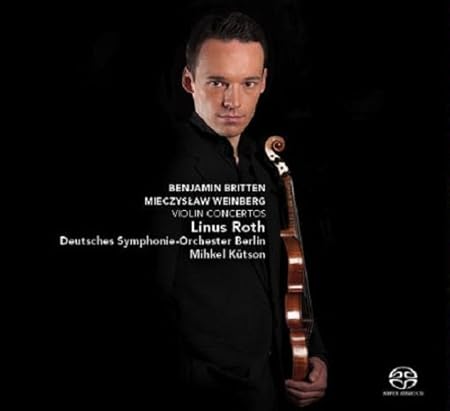
Linus Roth (Violin) with the Deutsches Symphonie-Orchester Berlin, con. Mihkel Kütson

Linus Roth plays violin concertos by Britten and Weinberg. Amazon.co.uk link here.


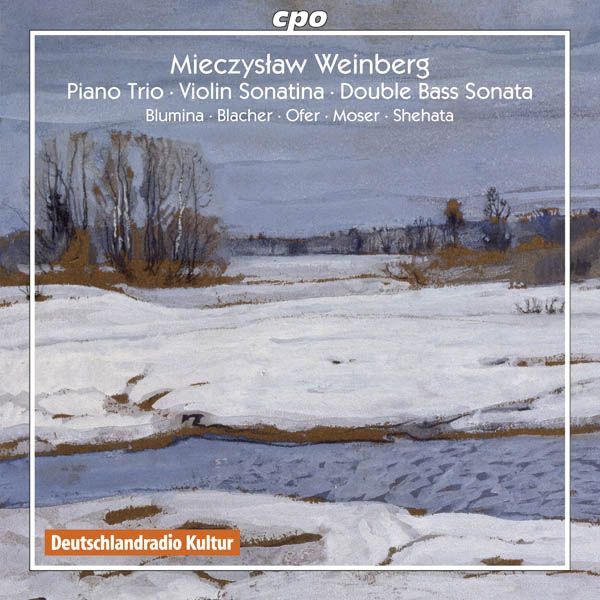
Weinberg chamber music for Strings, featuring the Piano Trio, Violin Sonatina and the rarely heard Double Bass Sonata. CPO label.

Available on the jpc.de website here.


Coming May 2014 - the next installment in the Naxos Weinberg Symphonies series, featuring Vladimir Lande and the St. Petersburg State Symphony Orchestra and Chamber Choir (Lande and the Orchestra having already featured on three Naxos Weinberg releases previously).

Performing the 18th Symphony, Op. 138 'War, there is no word more cruel', and the Trumpet Concerto, Op. 94, featuring Andrew Balio.

(My thanks go to Claude Torres for drawing my attention to this release). 

Weinberg links around the web

'Crusading for Weinberg': Linus Roth talks to Edward Seckerson (Youtube)

'Russia's third great composer' - Norman Lebrecht has Weinberg as disc of the week

Zaubersee Festival, Lucern 28th May-1st June 2014, with a focus on Weinberg's music

My own work

My work is ticking along nicely, with my attention now on writing my thesis itself, focusing on the context and analysis of Weinberg's Seventeen String Quartets.

I am also very happy to announce that I have an article coming out in the Musical Times hopefully by the end of this year, entitled 'Weinberg, Shostakovich, and the Influence of Anxiety'. See abstract below:


The close friendship between Weinberg and Shostakovich is well documented, particularly concerning their string quartets. The pair discussed their works during compositional gestation, and a friendly ‘competition’ for writing quartets started between them in the 1950s. Each was ‘winning’ at different points in time, but Weinberg was the ultimate victor with seventeen by the time of his death in 1996. The strong influence of Shostakovich in Weinberg’s music has been grounds for criticism and even dismissal, but what is less known is the truly reciprocal nature of their creative relationship. Weinberg was thirteen years his junior, but his first quartet predates Shostakovich’s by a year. Weinberg’s early work was prolific, having written six quartets by the time of Shostakovich’s third in 1946. Examining Shostakovich’s scores following these works reveals a great exchange of ideas between the two friends, with an undeniable influence from Weinberg in several pieces. With examples from the music of both composers, this article maps out a network of mutual influence. Such an unusual case study fits uneasily within several theorists' conceptions of artistic influence, none more than Harold Bloom and his book The Anxiety of Influence. Building on Weinberg and Shostakovich's example, I argue that Bloom's theory is not only ill-suited to their friendship, but indicative of a wider out-dated trend across theoretical thinking in the arts.


Monday, 13 January 2014

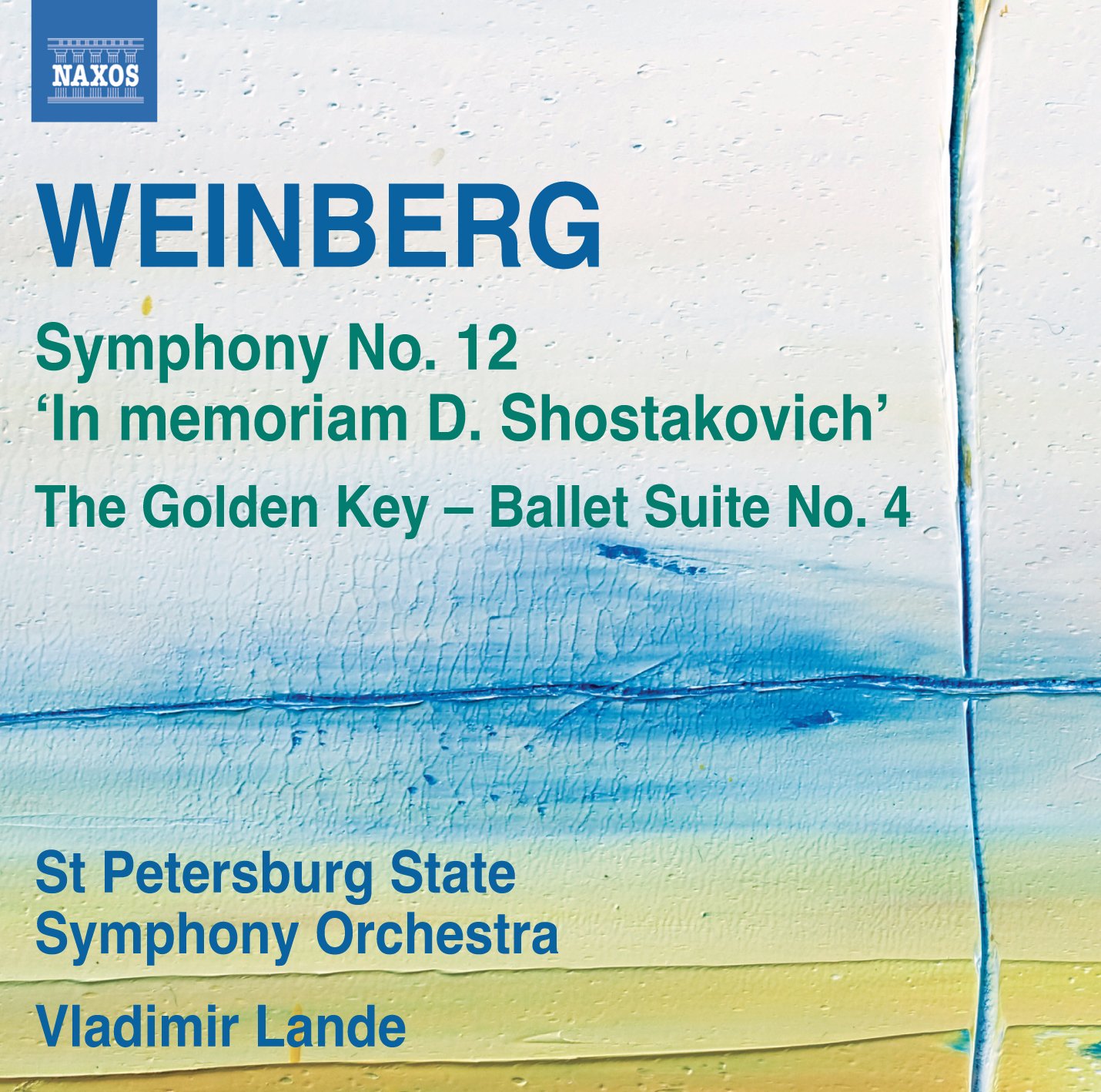
Review: Symphony No. 12, Golden Key, Suite No. 4 - Vladimir Lande and the St. Petersburg State Symphony Orchestra


The latest installment in Naxos' ongoing survey of Weinberg's symphonies: the verdict - great music with a good standard of performance (though not excellent). 

Every part of me wishes to praise this recording, if only for the music featured. Weinberg's 12th Symphony stands among his best, largely due to the heart-felt dedication following Shostakovich's death, and the Golden Key remains an entertaining ballet, demonstrating Weinberg at his most playful. 

The pairing of Lande with the St. Petersburg State Symphony Orchestra gave us the excellent recordings of the Sixth and Nineteenth Symphonies, both from 2012. While featuring excellent music, this disc fails to demonstrate the same unity and energy to be heard in their previous two recordings. 

Weinberg's Twelfth Symphony, Op. 114, was written in 1976, dedicated to Shostakovich. It joins the ranks of a glut of works similarly dedicated following Shostakovich's death in 1975, including Tishchenko's Fifth Symphony and Schnittke's Prelude in Memoriam Shostakovich. Weinberg's Twelfth is somewhat unusual in its lack of direct quotation from Shostakovich's music - for instance, there is a large number of dedicated works built around the 'DSCH' motif. Weinberg's Twelfth avoids such direct reference, instead choosing to emulate him stylistically, simultaneously raising questions about where to go following the loss of such an inspirational figure. 

The work opens with a declamatory unison sequence across the orchestra, searching for a stable centre. Unfortunately, the strings seem to fall victim to the higher passages in the opening movement, resorting to a near-shrieking style that soon becomes uncomfortable. Tempos are taken at a relatively safe pace, compared to previous recordings (see recommended further listening, below). 

The release does come into its own following the opening, the more playful Allegretto second movement showcasing the vitality that this ensemble has injected into their previous recordings (perhaps a shame it couldn't have seeped its way into the first movement!). The string section reclaim their dignity in the Adagio third movement, where they take a tender focus, giving a heart-breaking softness. The finale stands out as an excellent movement, notable from its opening xylophone, linked attacca from the previous movement. With such a distinct motif, the music gathers pace, and Lande does full justice to this rousing finale. 

The pairing of the symphony with the Fourth Suite from Weinberg's ballet The Golden Key is an example of excellent programming - the contrast between the works is striking, allowing the St. Petersburg State Symphony Orchestra full reign to showcase their range, particularly effective in the dance-like, cheeky passages in the suite. Richard Whitehouse's liner notes provide excellent background information for both works. 

I strongly recommend this recording, partly for its ambition and its place within the Naxos symphony cycle, as well as its excellent interpretation of the Golden Key suite. For an authoritative recording of the Twelfth Symphony I would look elsewhere, however.

Links for further reading: Naxos website link 
And a podcast about the recording from Naxos: link

Recommended further listening
For an contrasting recording, I recommend Vladimir Fedoseyev with the USSR TV and Radio Symphony Orchestra in their release, originally available on vinyl, conveniently uploaded on youtube:

For my 'authoritative' recording, I direct the reader to the second volume of Olympia's 'Vainberg' series, featuring the Twelfth Symphony performed by the forces that premiered the work, recorded a month after the premiere. The dedication is made all the more emotional by the presence of Shostakovich's son Maxim conducting (recording quality is poor compared to the Lande version - but the conviction in performance more than makes up for this).

Also available to listen on youtube (in six parts): 

Of course, I also direct the reader to Lande's previous Weinberg recordings on the Naxos label - both of them excellent.


Tuesday, 21 May 2013

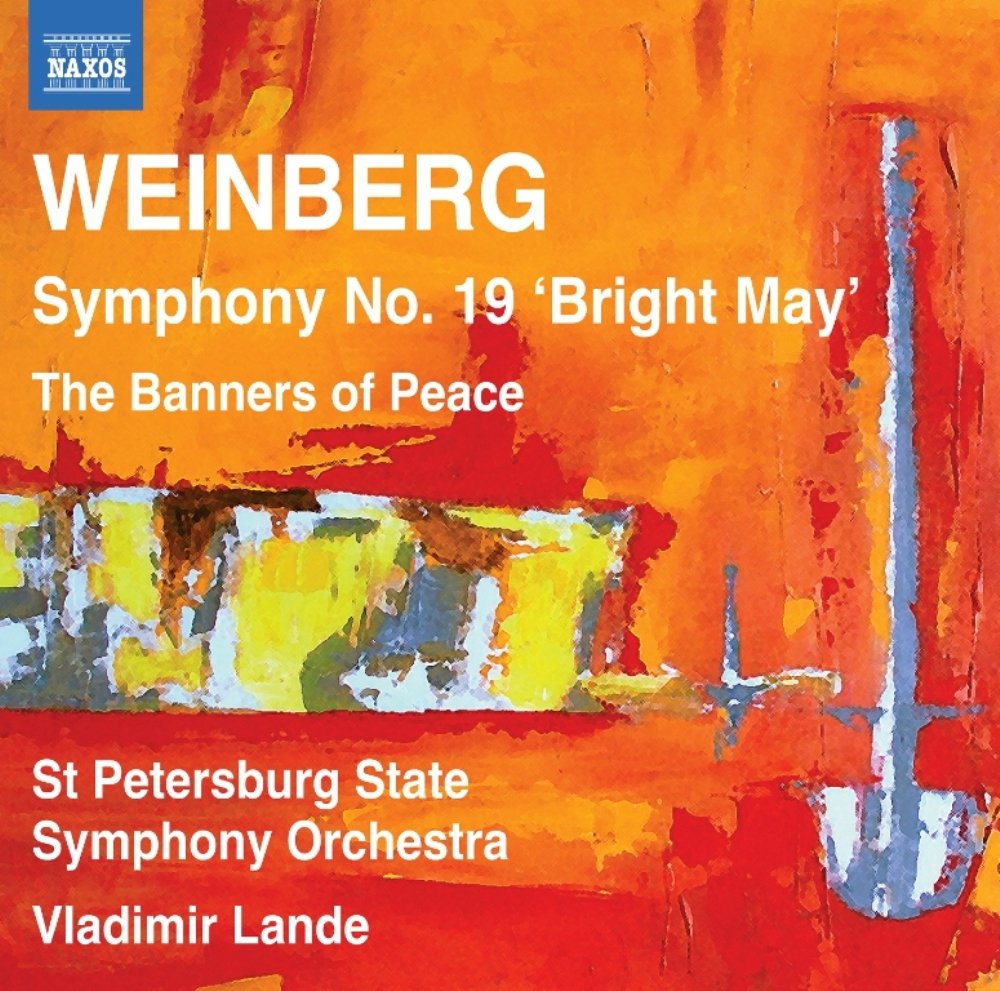
Review: Symphony No. 19, Op. 142, 'The Bright May' and 'The Banners of Peace', Op. 143 - Vladimir Lande and the St. Petersburg State Symphony Orchestra


This disc was released towards the end of 2012, and formed a continuation of Naxos' series on Weinberg's symphonies. The disc features two works from Weinberg's late period, his Symphony no. 19 and the orchestral poem 'The Banners of Peace'.

   The 19th Symphony was written in 1985 and is the last of a trilogy, starting with the 17th (Op. 137), and moving to the 18th (Op. 138), culminating in the 19th. The trilogy is subtitled 'Having crossed the threshold of War' or 'Having Survived the War'. No. 17 is subtitled 'Memory', No. 18 'War––there is no word more cruel' and No. 19 'Bright May'. The May in the title refers to the month the Great Patriotic War ended - but the symphony itself is more of a wary humanistic hymn to the lost, rather than a triumphant victory.

  Nos. 17 and 19 are headed with lines from the poet Anna Akhmatova. No. 17's reads:


My country, you have regained
Your power and freedom!
But in the treasure-house of the people's memory
There will always remain
The incinerated years of war.

No. 19's motto reads:

Victory is at out door
How to welcome this long-awaited guest?
Women will raise their babies
Who have been saved from thousands of deaths
– This will be the best salute.

The motto's of these works communicate the solemn tone of the trilogy. The shorter work paired on this disc, 'The Banners of Peace' bears a dedication to the 27th Congress of the Soviet Communist Party, and extends the mournful yet optimistic tone of the symphony that precedes it. Its thematic material is partly based on revolutionary songs (with some shared material from Shostakovich's 11th Symphony).

 The recording on this disc by the St. Petersburg State Symphony Orchestra led by Vladimir Lande is recorded in mostly excellent quality, and the playing throughout is faultless. Richard Whitehouse's liner notes give good background to the works on the disc, and the CD is extremely reasonably priced. The Symphony has previously been released with Vladimir Fedoseyev conducting in a live performance, but the sound on this recording is much more warm, not to mention that the accuracy of performance is much better here. I would certainly recommend buying a copy of Vladimir Lande and the Petersburg State Symphony Orchestra's recording.


Recommended recordings for further interest

–– Neos label, Symphony No. 17, 'Memory', Vladimir Fedoseyev and the Wiener Symphoniker


–– Olympia, Symphonies 14 & 18, Vladimir Fedoseyev and the USSR Radio Symphony Orchestra (This is now rather difficult to get hold of, admittedly).


–– Naxos, Symphony No. 8, 'Polish Flowers', Antoni Wit with Rafał Bartmiński and the Warsaw Philharmonic Orchestra and Choir (Naxos' most recent release of Weinberg - well worth hearing.)


–––––––––––––––––––––––––––––––––––––––––––––––––––––––

P.S. the Fedoseyev recording of Symphony No. 19 is available to listen to on youtube: Link