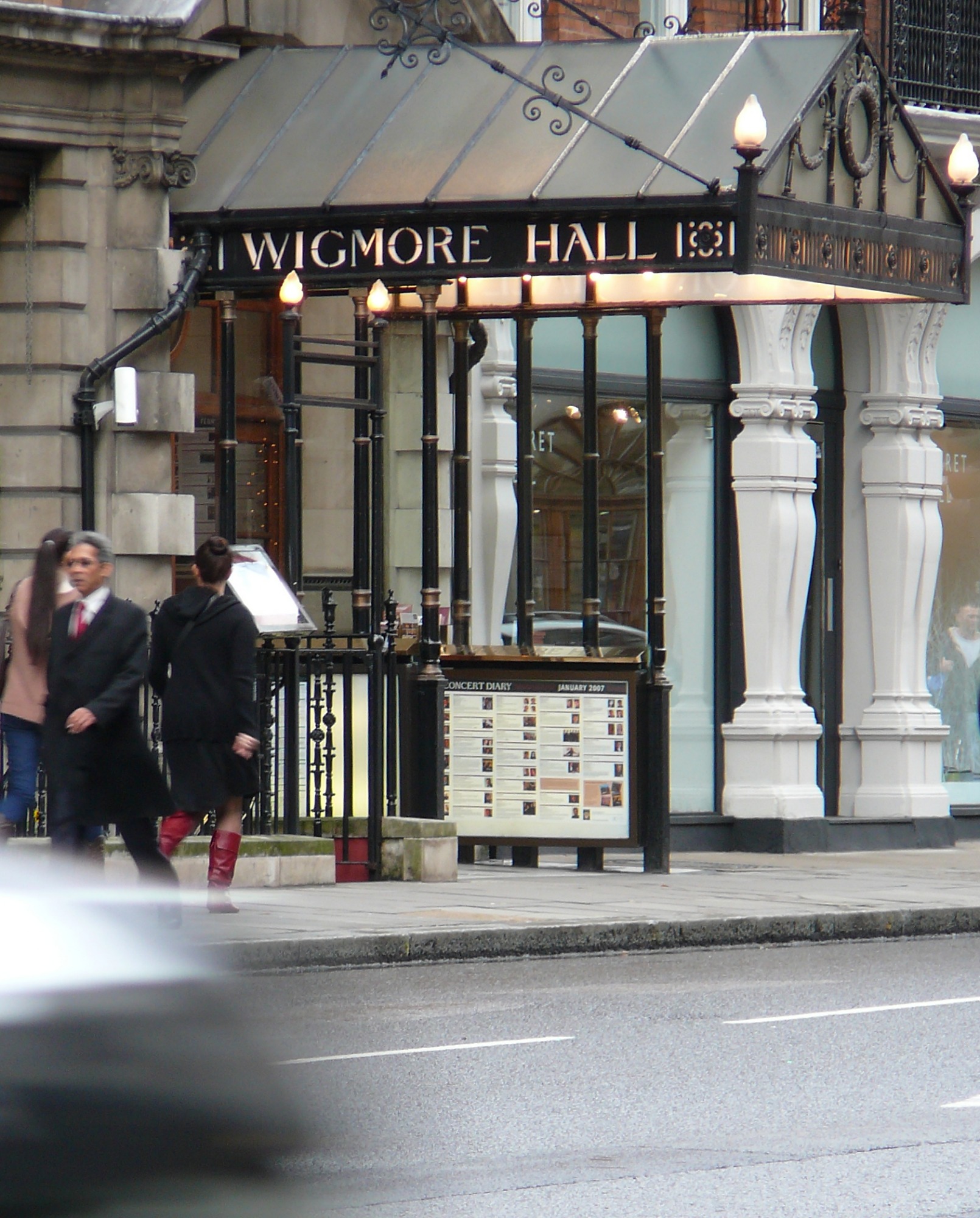
In the latest news relating to Weinberg's centenary year, I'm delighted to include details of the Weinberg season occurring at London's Wigmore Hall, beginning in October. The Wigmore Hall is one of the most famous venues for chamber music in the world, so it is wonderful that so much Weinberg will be performed there over the next few years.
In what it is certainly the most ambitious overview of Weinberg's chamber music ever attempted, the Wigmore Hall have announced that the Quatuor Danel will be performing a double-cycle of Weinberg and Shostakovich over two season, finishing in 2021. The Danels are, of course, the pioneers of Weinberg's String Quartets through their CPO recordings, and also their performances and work as part of their residency at the University of Manchester. The first concert will be on Thursday 24 October, with more throughout the 2019/20 and 2020/21 seasons.
Furthermore, Saturday 26 October brings an intensive day of events in the form of a Weinberg Focus Day. There will be three concerts of chamber music, featuring acclaimed violinist Linus Roth, including works for solo violin, violin and piano, piano trio, and song cycles. The day will also include a talk and launch event for my book Music behind the Iron Curtain. I will also be introducing each concert.
Further details can be found on the Wigmore Hall's website here and here. These look set to be incredibly exciting concerts and certainly a measure of how the Weinberg revival has come.
It may have been six months ago, but minds are still reeling from the amazing 'Weinberg: East and West' conference at the University of Manchester at the start of this year. Michelle Assay and David Fanning organised a fantastic four-day event, including concerts and a complete Quartet Cycle performed by the fantastic Quatuor Danel.
Egbert Baars, of the DSCH journal, attended and has uploaded an excellent gallery of photos from the conference. I've included a selection of photos below (reproduced here with permission):
From my workshop with the Quatuor Danel on the original version of Weinberg's First Quartet.
Gidon Kremer, who paid us an extraordinary 'flying' visit, stopping by with enough time to perform and give a moving talk.
The ensemble from one of the afternoon concerts (L-R): Marc Danel, Michelle Assay, Rosalind Dobson
A video conference call with Victoria Bishops, Weinberg's first daughter.
Conference delegates enjoying a meal before an evening concert.
Truly exceptional, the Quatuor Danel: Marc Danel, Gilles Millet, Vlad Bogdanas, and Yovan Markovitch.
Performers and scholars. back row L-R: Larissa Zvereva, Vlad Bogdanas, Yovan Markovitch, and David Fanning; front row L-R: Inessa Dvuzhilnaya, Gilles Millet, Michelle Assay, Marc Danel, and Verena Mogl.
Conference sessions: Antonina Klokova and Verena Mogl.
Aleksander Laskowski.
Michelle Assay and David Fanning.
Group photo of performers, scholars, and general public.
For me, I have always felt that a landmark in the Weinberg revival would be reached with the first performance of his music at the BBC Proms. As the largest festival of classical music in the world, they represent the 'establishment' of music in the UK. At long last, in time for his centenary year, this year's Proms features Weinberg's music for the first time ever in three concerts spread across the season. Here's a summary of the events:
1) Tuesday 6 August, BBC Symphony Orchestra, Dalia Stasevska (cond.), Sol Gabetta (cello)
In addition to these three concerts, there's also a Proms Plus talk on Weinberg before the Thursday 22 August concert, which will feature myself and Erik Levi discussing Weinberg's life and music. More details here.
All-in-all, an exciting representation of Weinberg's music. I should add, all concerts will be broadcast live on Radio 3, and will also be available to listen back online.
I am delighted to share news about the publication of my upcoming book, Music behind the Iron Curtain: Weinberg and his Polish Contemporaries, with Cambridge University Press. Here's the blurb:
Mieczysław Weinberg left his family behind and fled his
native Poland in September 1939. He reached the Soviet
Union, where he become one of the most celebrated
composers. He counted Shostakovich among his close
friends and produced a prolific output of works. Yet he
remained mindful of the nation that he had left. This book
examines how Weinberg’s works written in Soviet-Russia
compare with those of his Polish contemporaries; how one composer split from his national tradition and how he
created a style that embraced the music of a new homeland,
while those composers in his native land surged ahead in a more experimental vein. The points of contact between
them are enlightening for both sides. This study provides an
overview of Weinberg’s music through his string quartets,
analysing them alongside Polish composers. Composers
featured include Bacewicz; Meyer; Lutosławski; Panufnik;
Penderecki; Górecki; and a younger generation, including
Szymański and Knapik.
The book will be available from mid-Autumn; for anyone able to travel to London, there will also be a launch event at the Wigmore Hall on Saturday 26 October. More details (and tickets) available here.
I'm very excited to be able to share this research with you all, and I hope to have more posts about the book over the coming weeks and months.
I've just got back from another research trip, this time to Warsaw.
Of course, this is a city with strong links for Weinberg research, in that Weinberg lived the first nineteen years of his life here, before fleeing the Nazi invasion in 1939. See below for a few photos from my trip.
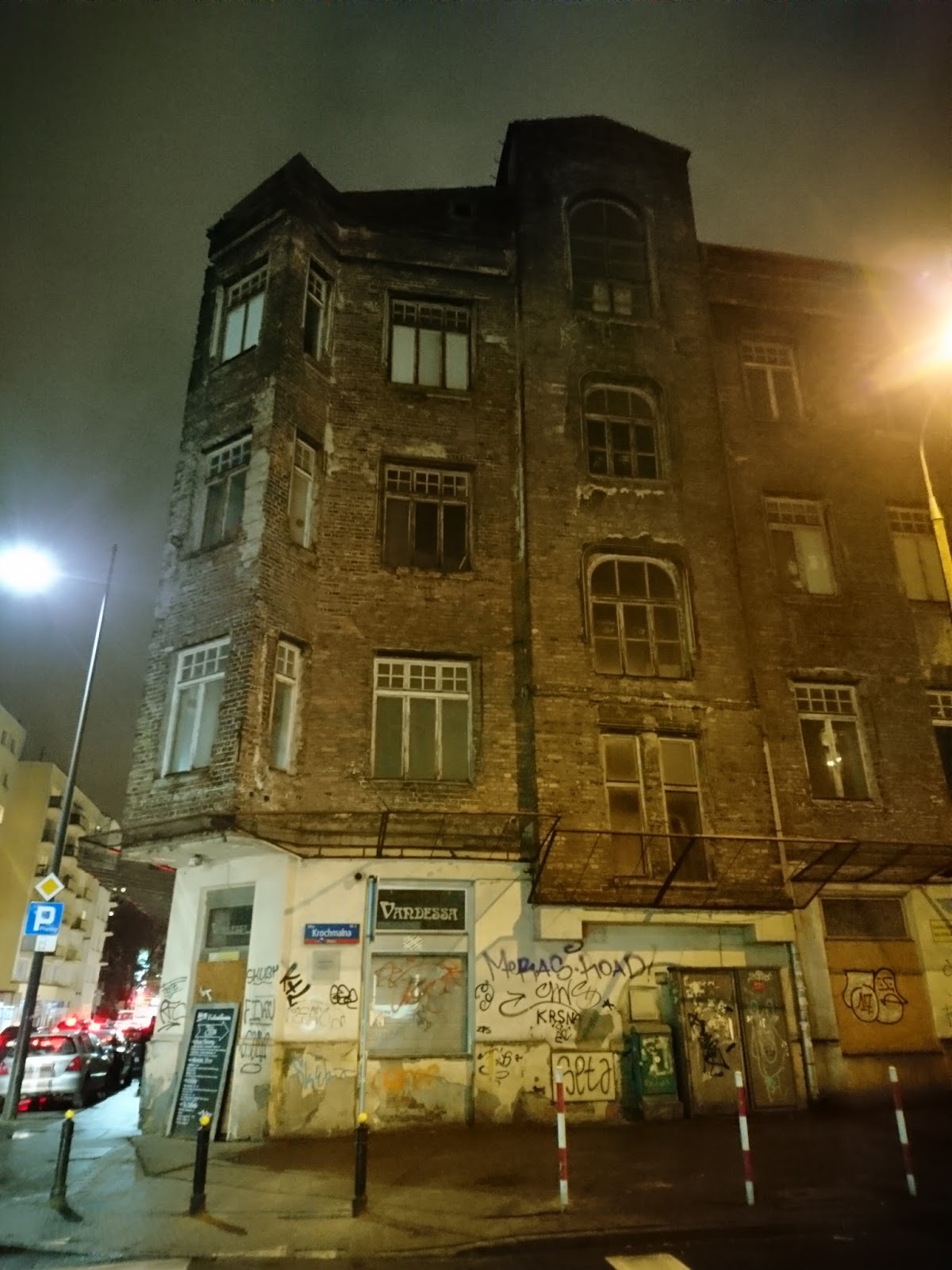
This is 66 Żelazna Street in Warsaw, the building where Weinberg lived 1919-1939. It's near the Wola district, an area that became part of the Warsaw Ghetto during the war. It's remarkable that it's still standing today, seeing as how much of Warsaw was flattened by the end of the war. It's looking in a sorry state, and is marked as an 'unsafe building'. I anticipate that it will be knocked down soon.
The flat where Grażyna Bacewicz lived, 35 Koszykowa Street.
The flat where Karol Szymanowski lived, 47 Nowy Świat (Joseph Conrad actually lived in the same building, several decades earlier).
During my research trip, I was lucky to meet with two composers, Paweł Szymański, and Paweł Mykietyn. Both were extremely kind in agreeing to meet, and generous with their time. Combine this with several library visits, and I have plenty of material to be getting on with for the 'Parallel Worlds' Weinberg book.
Perhaps the most exciting part of my trip was a rare opportunity to visit Lutosławski's home at 39 Śmiała Street. I was very honoured to meet with Marcin Bogusławski (Lutosławski's stepson) and his wife Gabriela Bogusławska. We had a long discussion, with Marcin reminiscing about his stepfather and his working methods. Here are a few photos from the house:
The plaque outside Lutosławski's house.
Lutosławski's desk (and some of his books).
The other end of Lutosławski's study.
All-in-all, an extremely exciting trip. Watch this space for further photos/news.
Just got back from my first visit for the 'Parallel Worlds' project, in Katowice, southwestern Poland. In a speedy three-day visit, I managed to visit library collections, attend a concert, have several meetings, as well as fit in some sight-seeing. Here's some photos from my trip:
This impressive red-bricked building is the Karol Szymanowski Academy of Music, the school of music in Katowice. The imposing gothic front building was originally built for the local parliament, but is now used for music practice and lectures. Behind that, you can just about see the large box-like modern extension, which houses a concert hall, library, and electronic music studios. Notable alumni of the institution include Górecki, Krystian Zimmerman, Eugeniusz Knapik, Aleksander Lasoń, and the Silesian String Quartet.
This is the front of the Silesian Library, the largest library in the region (and one of the newest, opened in 1998). There is a huge music collection here, with an enormous amount of printed materials - I went to consult several quartet scores, as well as to track down several rarer English-language publications.
In the block opposite the Academy of music, there is a cosy 'Museum of Historic Katowice'. Contained across two floors of a large townhouse building, the second floor recreates a middle-class flat in the fin de siècle era. Lighting was tough for photos, but there were several pianos included in the museum (including a square piano from 1840).
Located further north than the Academy is a small residential area, with the Plac Grunwaldzki park in the middle. This features a 'Gallery of Artists', several rather austere-looking monuments to famous artists associated with Katowice. Henryk Górecki is included here, though this likeness depicts a rather serious expression, which doesn't seem to fit with most of the description and testimony of Górecki as a person. Still, it was nice to see a monument to a musical figure.
NOSPR - home of the Polish National Radio Symphony Orchestra. This impressive new building was opened in 2014, and designed by the same architects who built the modern addition to the Academy building (see above). I attended the Chamber Hall for a concert of Russian music given by the Silesian Quartet. The Silesian Quartet are currently in the process of recording a Weinberg cycle, with a new instalment to be released very soon.
I'm currently working through a huge number of Polish quartets, with a mind to featuring as many of them as possible in the new book. Watch this space for updates on future research trips.
While my activity on this blog has slowed considerably, I can promise that my research activity has not ceased. That is why I am writing this to announce research and work on my next project, a monograph study on Weinberg and his Polish contemporaries, titled 'Parallel Worlds'.
This book will examine how Weinberg left Poland behind and delved into the mid-century Soviet style of composition, while also retaining influences and contacts in post-war Poland. I will continue my analytic focus on String Quartets, though taking in a wider focus of composition.
Research and writing are in early days yet, but I have made a start on initial progress, with my first research visit in Katowice in a few weeks. I will post updates on this page, including a 'diary' of sorts of my research visits.
As a preview, here's the first abstract for the book:
Mieczysław Weinberg fled his native Warsaw in September 1939, leaving
behind a burgeoning career as a composer and pianist. He eventually reached the
Soviet Union, where he made a name for himself, eventually becoming one of the
USSR’s most celebrated composers, with a prolific output including twenty-two
symphonies and seventeen string quartets. He worked alongside Shostakovich, and
his works were performed by Rostropovich, Rozhdestvensky, Oistrakh, and the
Borodin Quartet. Throughout his career, however, he was mindful of the nation
that he had left behind, with constant references to Poland in his works. He
only revisited Poland once in his adult life, for the 1966 Warsaw Autumn
festival. Despite this apparent lack of contact, he frequently wrote works to
Polish texts and with Polish themes. He also maintained correspondence with
several Polish composers, including Krzysztof Penderecki and Krzysztof Meyer.
As the Weinberg revival
has thrown his works into an international spotlight, this book takes the
occasion of his centenary to examine how his works written in Russia compare
with his Polish colleagues; how one composer split off from his national
tradition and created a style that embraced the music of a new homeland, while
those composers in his native land surged ahead in a more experimental vein.
More often than not, the points of contact between them are enlightening for
both sides. This study provides an overview of Weinberg’s music through his
String Quartets, analysing them alongside a host of Polish composers (many of
them featured for the first time in an English-language publication). Through
these comparisons, Weinberg’s distinct style drawn from parallel worlds is
thrown into a new light.
There is a tight schedule for publication in 2019, Weinberg's centenary year. I'll keep you posted.
Apologies for 'Radio Silence' on this blog over the last few months; I've been busy with work and several other projects. I'm afraid that posts on this blog are likely to be much more infrequent than during my PhD - though I will endeavour to pick up the pace as I move onto my next piece of research (see below).
Here is an update on all things Weinberg related that have happened in recent months, or are upcoming later this year.
News
Preparations are afoot for several exciting events for 2019, Weinberg's centenary. It's early days for planning at the moment, but I can confirm that there are major celebrations planned for Manchester and London over 2019.
Performances of Weinberg's music continue to increase in frequency, especially in the United States, where his chamber music is enjoying special attention.
February's Moscow Conference was a fantastic success, featuring four days of talks and presentations, along with concerts and opera performances. For an excellent write-up of the event, see Michelle Assay's review in DSCH Journal, issue 47.
This year has seen new productions of The Passenger in Moscow, and also a new production of Congratulations ['Mazl' Tov!'] in Heidelberg.
Concerts
Later this year, Weinberg's Violin Concerto will receive several outings from several different touring ensembles. First, there is Gidon Kremer, continuing his passionate support for Weinberg's music. Secondly, there is Linus Roth, who has recently completed his project to record all of Weinberg's violin music. Finally, there is Mirga Gražinytė-Tyla, who will be conducting the work with the Los Angeles Philharmonic.
The Novaya Opera in Moscow have further performances of their hugely successful production of The Passenger - with more information available here. Also, see trailer below.
In October, Weinberg's Second Piano Sonata will be heard in the UK on two consecutive evenings, though by different pianists in different cities. Katya Apekisheva will perform the work on Fri 5 October, as part of the London Piano Festival at Kings Hall, and Murray McLachlan will perform it on Sat 6 October at the Stoller Hall in Manchester (McLachlan, of course, recorded a much-loved cycle of Weinberg's piano sonatas in the late 1990s).
In addition to all this, the Musikverein in Vienna will see a performance of Weinberg's Piano Trio by the Altenberg Trio with Christopher Hinterhuber.
Videos
The Semperoper Dresden supplied this extended preview of their production of The Passenger from earlier this year.
Similarly, the Moscow Novaya Opera supplied this trailer for their superb production of the same opera.
CDs
A number of exciting CDs are upcoming, or have just been released. Here is a selection:
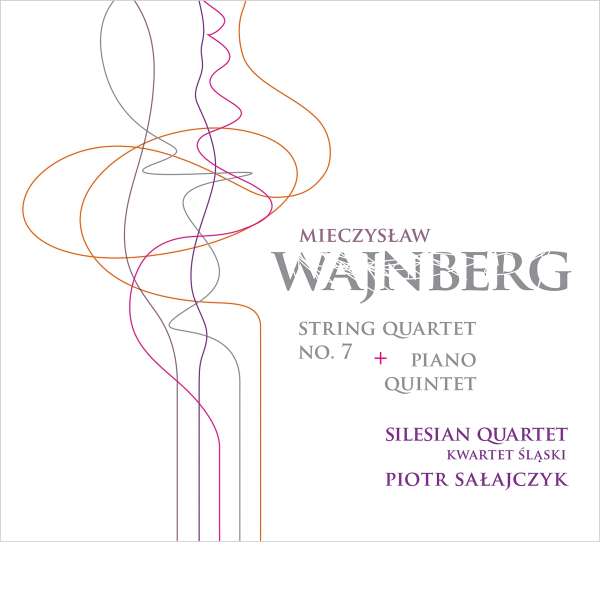
The Silesian Quartet, Wajnberg, String Quartet 7 + Piano Quintet (Accord)
This disc is the first in a new cycle of Weinberg's String Quartets, performed by the excellent Silesian Quartet. If this CD is anything to go by, it will be a superb cycle. They are joined by pianist Piotr Sałajczyk for Weinberg's Piano Quintet.
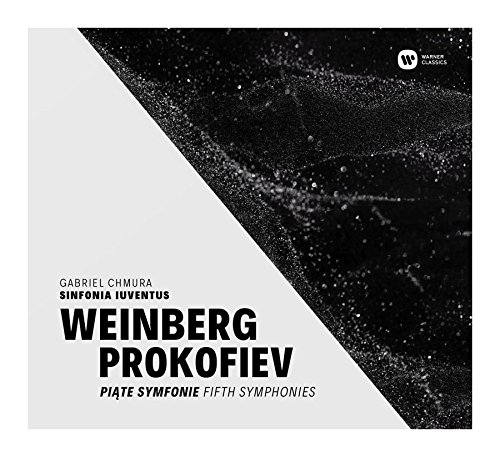
Gabriel Chmura, Sinfonia Iuventus, Weinberg Fifth Symphony (Warner Classics)
The Polish Simfonia Iuventus, conducted by Gabriel Chmura, opt to combine Weinberg's Fifth Symphony with Prokofiev's Fifth in their first disc on the Warner Classics Label. This is sure to be an interesting combination, and I certainly look forward to this release.
Grigory Kalinovsky and Tatiana Goncharova, Weinberg Complete Sonatas for Violin and Piano (Naxos)
Naxos continue their steady stream of Weinberg releases with this excellent set of Weinberg's sonatas for violin and piano - a welcome addition to the extensive range of options for this repertoire.
Publications
In terms of academic work on Weinberg, several upcoming releases are in preparation, though the majority are expected for the 2019 centenary. Several academic theses on Weinberg's music have been completed recently, including Anna Voskoboynikova on the piano works, and A.S. Conway on his Flute music.
As for myself, as well as regularly teaching at Royal Holloway, I am currently beginning work on a large-scale project that will result in a monograph on Weinberg in his Polish context(s). More details to follow soon.
As always, if readers wish to promote any new recordings, concerts, or any new research, please don't hesitate to get in contact.
In February 2017, the conference 'Mieczysław Weinberg (1919-1996): A Rediscovery' will take place in Moscow, arguably the largest ever event devoted to Weinberg's life and music. The conference will unite performers, theatre directors and stage designers, academics, and figures from Weinberg's life, in an extended programme over two weeks. The core of this revolves around 16-19 February, with four days of papers, talks, and interviews. All of this is hosted in the Bolshoi Theatre, a venue that imparts a high level of prestige to the proceedings. The wider conference programme includes concerts, film screenings, and three stagings of Weinberg operas (including two separate stagings of The Passenger).
The conference is co-presented by the Bolshoi Theatre and the newspaper Muzykalnoe obozrenie.
The operas presented are:
The Idiot - Directed by Evgeny Arye, musical direction by Michał Klauza (in a production receiving its premiere on 13 February).
The Passenger - Directed by Sergey Shirokov, musical direction by Jan Latham-Koenig (a new production that received its premiere on 27 January).
The Passenger - Directed by Thaddeus Strassberger, conducted by Oliver van Dohnányi (presented by the Yekaterinburg State Academic Opera and Ballet Theatre, in a production that premiered in September 2016).
The academic side of the conference brings together over 40 scholars from across the world (the conference languages are Russian and English). The four days of the conference are organised as follows:
16 February
'Staging History of Mieczysław Weinberg's operas - The Idiot in Russia today'
17 Feburary
'The Passenger: Past and Present'
18 February
'The Life and Legacy of Mieczysław Weinberg: Chamber Works'
(followed by an evening concert of Weinberg's chamber music)
19 February
'Mieczysław Weinberg: Identity, Biography, Personality'
Highlights of the panel sessions include:
- the creative team behind the Bolshoi Theatre's production of The Idiot - A roundtable on The Passenger
- An interview and discussion with Zofia Posmysz, author of the novel, The Passenger, and herself a former Auschwitz prisoner.
- An interview and discussion with David Pountney, celebrated stage director, and main creative force behind the 2010 Bregenz Festival.
- A roundtable discussion with Weinberg's friends, colleagues, and family. The panel includes Weinberg's widow, Olga Rakhalskaya, and his second daughter, Anna Weinberg, as well as Tommy Persson, who has been a driving force behind much of the Weinberg revival in recent decades.
I am honoured to be speaking on 18 February, as part of a day of talks on Weinberg's Chamber Music. I will be presenting a paper titled '"An Encyclopedia of the Genre": Weinberg's String Quartets', which summarises some of the findings from my doctoral thesis.
For a full listing of the Conference schedule, please see the following link: Conference programme
Any questions should be directed to the conference email address: weinberg.moscow2017@gmail.com
As attention on the music of Mieczysław Weinberg (1919-1996) has increased in the years after his death, so has the need for an analytical study of his musical style and language. This thesis surveys Weinberg’s changing style through a genre that spans almost his entire output: the string quartet. His close friendship and artistic affinity with Shostakovich helps make his music accessible to a wider audience, though closer examination reveals Weinberg’s individuality and a quite distinct language from that of his mentor. In support of this contention, a wide range of analytical approaches is deployed in this dissertation, along with a pragmatic methodology for presenting a holistic overview of Weinberg’s quartets.
Weinberg’s quartet cycle occupies an important place in twentieth-century music, with parallels to Shostakovich, Bartók, and other Soviet composers, including Myaskovsky, Shebalin, Levitin, and Boris Chaykovsky; correspondences and distinctiveness are explored in the second chapter. The third chapter surveys Weinberg’s musical narratives, with recourse to theories from Kofi Agawu, Boris Asafiev, and Jacques Derrida. Form is the focus of the fourth chapter, where ideas from Mark Aranovsky, and James Hepokoski and Warren Darcy are deployed to highlight Weinberg’s problematising of traditional forms in his music. Chapter five explores Weinberg’s multi-faceted approach to harmony, with concepts expanded from Lev Mazel, Yury Kholopov, and the neo-Riemannian school of analysis.
The picture that emerges is of Weinberg’s individuality and distinctive voice, manifested in a controlled experimentalism and a tendency towards extended lyricism. His affinity with better-known composers may prove an approachable entry-point for wider audiences, but many of the most striking elements in his quartet cycle are of his own invention. His quartets stand as an important contextual dimension for understanding Shostakovich’s cycle, and also for appreciating the broader repertoire of Soviet chamber music. As his centenary approaches, engagement with Weinberg’s music continues to increase: this thesis provides contexts and analysis-based conclusions to complement this ongoing revival.
I do hope my thesis will be of interest to you. Please do not hesitate to get in contact if you have any queries or suggestions.
Here's an update of Weinbergian news and events for the summer months of 2016 - with a new publication, and a Weinberg conference!
In the single biggest piece of news in my own work, my thesis was submitted in June, and I passed my PhD viva a few days ago (with minor corrections). Expect a link of some sort to read the full finished thesis in a few weeks.
Weinberg Studies
Several events have occurred in the relatively-quiet field of 'Weinberg Studies'. Firstly, the German-language journal 'Die Tonkunst' featured in their April issue a series of papers from a 2012 Hamburg conference on 'Weinberg in the Brezhnev era'.
This excellent volume features six articles (with one in English), discussing Weinberg's place in Soviet music, Socialist Realism in the stagnation era, and further focuses on Weinberg's cello sonatas and Polish-language works. The contents runs as follows:
Regular readers will have noticed that this blog has fallen quiet in the last six months or so. I have been working away, and I'm very pleased to say that my thesis has been completed and submitted, awaiting a viva examination and any subsequent corrections. Watch this space for any further updates or news.
Perhaps the biggest piece of Weinberg-related news came on the twentieth anniversary of his death, on 26 February, with the release of a new interview with his first daughter, Victoria. The interview with Elisaveta Blumina (and edited by Il'ya Ovchinnikov) contains many warm details of Weinberg as a loving and kind father, as well as Victoria's thoughts on his music. The article can be found here (in Russian).
Victoria Bishops (neé Weinberg) and Elizaveta Blumina (picture from culta.ru)
While the details about Weinberg as a Father and his years in Warsaw go some way to 'fill in the gaps' for information about these aspects of his biography, it is in her claims about the years up to his death that Victoria makes some rather shocking assertions.
Firstly, she alleges that the mother of Weinberg's second wife, Grinchar Nadezhda Aleksandrovna, worked as a psychiatric nurse in the Butyrka prison - where Weinberg had been imprisoned (details are somewhat hazy as to where exactly Weinberg had been held during his imprisonment in 1953 - several sources mention both the Lubyanka and the Butyrka, suggesting an initial interrogation in the Lubyanka and then a holding cell in the Butyrka). This is, however, the first time that Weinberg's mother-in-law has been linked to the Butyrka in this way (this is crucial, since Weinberg shares the same grave as his mother-in-law, in Domodedovo cemetary). Weinberg's flat in Moscow, where his family live to this day, overlooks the Butyrka prison.
Further to this, Victoria asserts that Weinberg was baptised against his will (which, in the orthodox faith, makes any baptism illegitimate). He was baptised into the Russian Orthodox Church in a quiet ceremony in his Moscow flat a few weeks before his death. According to Anna, his second daughter, it was entirely his own decision, with no prompting from anyone else.
------------
Reactions to these claims have ranged from confusion to outrage - especially in defence of Weinberg's second wife, Olga, and their daughter, Anna. Olga Rakhalskaya herself has written a response - to be found here (again, in Russian), at the end of which she concludes: 'on the twentieth anniversary of his death, 26 February, was there no better way to honour him than by throwing mud at the people close to him?'. She proceeds to put the record straight about her mother (who was not a psychiatric nurse at the Butyrka) and also gives more detail about Weinberg's conversion - that he swore to reach a decision by his birthday, 8 December, but had in fact made up his mind before this point. Olga's response also features excerpts from Weinberg's letters, previously published in 2000. These alone make Olga's response worth reading.
Olga Rakhalskaya (picture from muzobozrenie.ru)
The outcome of both of these articles remains to be seen - while both provide rich details for the scholar, it is on the personal level of Weinberg's life and family that makes them both vital but difficult reading.