Showing posts with label Daniel Elphick. Show all posts

Thursday, 20 March 2014

March update

A quick selection of upcoming releases, events and Weinberg-related resources around the web.

Album releases
I am awaiting the following discs, reviews will be posted over the coming weeks:
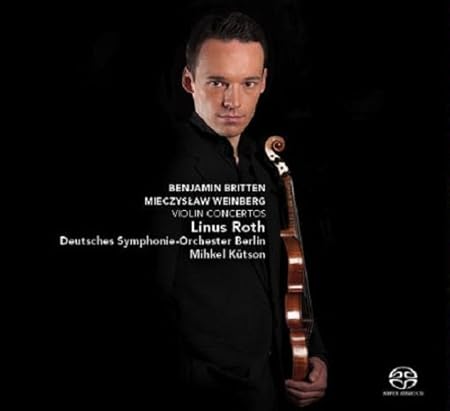
 
Linus Roth (Violin) with the Deutsches Symphonie-Orchester Berlin, con. Mihkel Kütson

Linus Roth plays violin concertos by Britten and Weinberg. Amazon.co.uk link here.
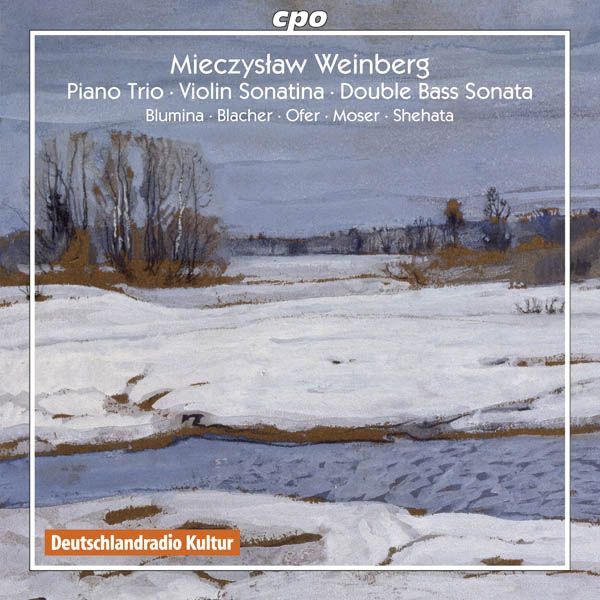


Weinberg chamber music for Strings, featuring the Piano Trio, Violin Sonatina and the rarely heard Double Bass Sonata. CPO label.

Available on the jpc.de website here.


Coming May 2014 - the next installment in the Naxos Weinberg Symphonies series, featuring Vladimir Lande and the St. Petersburg State Symphony Orchestra and Chamber Choir (Lande and the Orchestra having already featured on three Naxos Weinberg releases previously).

Performing the 18th Symphony, Op. 138 'War, there is no word more cruel', and the Trumpet Concerto, Op. 94, featuring Andrew Balio.

(My thanks go to Claude Torres for drawing my attention to this release). 

Weinberg links around the web

'Crusading for Weinberg': Linus Roth talks to Edward Seckerson (Youtube)

'Russia's third great composer' - Norman Lebrecht has Weinberg as disc of the week

Zaubersee Festival, Lucern 28th May-1st June 2014, with a focus on Weinberg's music

My own work

My work is ticking along nicely, with my attention now on writing my thesis itself, focusing on the context and analysis of Weinberg's Seventeen String Quartets.

I am also very happy to announce that I have an article coming out in the Musical Times hopefully by the end of this year, entitled 'Weinberg, Shostakovich, and the Influence of Anxiety'. See abstract below:


The close friendship between Weinberg and Shostakovich is well documented, particularly concerning their string quartets. The pair discussed their works during compositional gestation, and a friendly ‘competition’ for writing quartets started between them in the 1950s. Each was ‘winning’ at different points in time, but Weinberg was the ultimate victor with seventeen by the time of his death in 1996. The strong influence of Shostakovich in Weinberg’s music has been grounds for criticism and even dismissal, but what is less known is the truly reciprocal nature of their creative relationship. Weinberg was thirteen years his junior, but his first quartet predates Shostakovich’s by a year. Weinberg’s early work was prolific, having written six quartets by the time of Shostakovich’s third in 1946. Examining Shostakovich’s scores following these works reveals a great exchange of ideas between the two friends, with an undeniable influence from Weinberg in several pieces. With examples from the music of both composers, this article maps out a network of mutual influence. Such an unusual case study fits uneasily within several theorists' conceptions of artistic influence, none more than Harold Bloom and his book The Anxiety of Influence. Building on Weinberg and Shostakovich's example, I argue that Bloom's theory is not only ill-suited to their friendship, but indicative of a wider out-dated trend across theoretical thinking in the arts.


Wednesday, 22 January 2014

January 2014


Hello readers, I hope all is well. This is my update for January 2014. As I'm sure you are aware, The Passenger premiered in Houston, Texas on Saturday 18th January, and I eagerly await a plethora of reviews. Below is a selection of those already published:

David Clarke, Broadway World - link 'the only appropriate superlative to describe HGO's US premiere of The Passenger is brilliant'. 

Scott Cantrell - Dallas Morning News - link 'Sadly, the opera could use a lot of editing and tightening... three hours, with one intermission, seemed interminable'.

D.L. Groover - Houston Press - link 'Weinberg's forgotten opera is everything contemporary opera should be... a shattering experience'.

I shall update the above list, hoping to keep a balance between critical and praise-ridden reviews. 
If my predictions are correct, The Passenger will go down a storm with US audiences and critics, but only time will tell. Future US runs are planned for New York in July, and Chicago in 2015.

 Melody Moore and Michelle Breedt in 'The Passenger', Houston Grand Opera 2014.

-----------------

I hope you'll find the youtube videos below interesting.

1. Linus Roth discusses his upcoming release, featuring the Britten and Weinberg violin concertos.

2. Gidon Kremer and Martha Argerich perform Weinberg Sonata for Violin and Piano No. 5, Op. 53 (live recording).

----------------

I'd like to plug an updated version of the University of Manchester's webpage about Weinberg research at the University (link). The page sums up the wider impact of Professor Fanning's research, and details several exciting projects for the future.

-----------------

My own work is plodding along well, with another big panel meeting assessment for next week. I am submitting a literature review chapter for the meeting, in which I detail approaches to analysis that I wish to apply to Weinberg's quartets. I'll keep you posted with updates.

I also mentioned in December that I was lucky enough to be accepted to speak at the University of Leeds conference 'Music, Memory and Migration in the Post-Holocaust Jewish Experience', taking place July 2014. Please find the abstract for my paper below:

Commemorating the Past: Weinberg’s Experience as a Jewish Migrant in the USSR


Weinberg’s background is unique among Soviet composers; he fled eastwards from Poland in 1939 and was accepted into the USSR. He established a successful career for himself, working with the most prominent Jewish musicians of his day and praised as ‘the leading Soviet-Jewish composer’. Having narrowly escaped Nazi Germany, Weinberg fell victim to Stalinist antisemitism and was imprisoned for several months in 1953. Upon his release, he made it his life’s mission to commemorate those who had fallen victim to atrocities.
    Jewish themes in Weinberg’s music serve a dual purpose; to commemorate victims of the Holocaust, including his parents and sister, and to reassert his Jewish heritage, despite his displacement to a less-than hospitable climate. An internal struggle can be traced across his music, to reconcile between the need to celebrate his heritage as well as to celebrate the USSR as his ‘saviours’ from the Nazis. In this paper, I explore the experience of Jewish composers in the Soviet Union through Weinberg’s case study. I also outline Weinberg’s commemorative works including, most controversial of all, his opera The Passenger. The opera is provocative, not least because the on-stage action is set in Auschwitz itself. This provides fresh challenges for modern-day audiences and critics alike. The Passenger also calls into question the appropriateness of commemoration through depiction, alongside Weinberg’s struggle to represent his displacement through music.


 While it is certainly difficult to watch, the only appropriate superlative to describe HGO's US Premiere of THE PASSENGER is brilliant
While it is certainly difficult to watch, the only appropriate superlative to describe HGO's US Premiere of THE PASSENGER is brilliant.
While it is certainly difficult to watch, the only appropriate superlative to describe HGO's US Premiere of THE PASSENGER is brilliant

Friday, 3 January 2014

RMA Research Students' Conference 2014

For anyone attending, I will be speaking at the RMA Research Students' Conference next week, held at the University of Birmingham. My paper is entitled 'The Influence of Anxiety', and I will be speaking at 14:45 on Wednesday 8th January in the 'Psychology of Music' session.

My paper is on the significance of Harold Bloom's book The Anxiety of Influence, and its applications in musicology, followed by wider thoughts on the aesthetics of influence in music (with a few references to my work on Weinberg). Please find my paper abstract below:

Daniel Elphick, The Influence of Anxiety
Harold Bloom’s theories of influence in poetry are well known and many scholars have sought to apply them to wider fields of art. His aggressive vision of artistic influence has new authors ‘appropriate’ their predecessors’ works leading to an Oedipal elimination of the father-figure of influence. Bloom’s theories have proved highly significant in musicology, but also problematic. This paper seeks to give a brief overview of Bloom’s writings and move to a review of Musicologists’ attempts to utilise his theories as set out in the book The Anxiety of Influence. It becomes apparent that these cannot be easily adapted to music since they perpetuate the contested concept of ‘originality as progress’. I seek to demonstrate this with short case studies of friendships between composers that cannot be easily moulded to fit alongside Bloom’s aggressive writings. With these, I suggest a new template of musical influence, utilising thoughts from T.S. Eliot, Benjamin Britten and several others authors simultaneously calling for a reassessment of this complex issue from the perspective of musicology.