Thursday, 1 October 2015

Weinberg Piano Quintet in Manchester

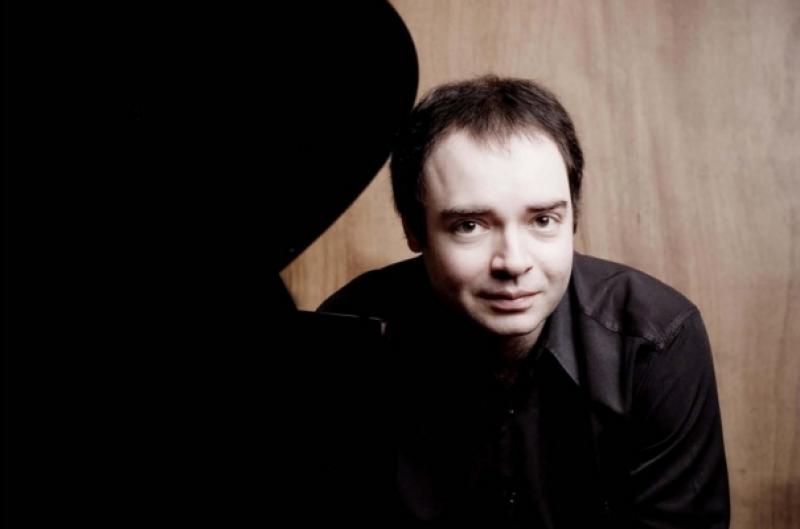
Tomorrow evening, the Quatuor Danel will be performing Weinberg's Piano Quintet, Op. 18, in Manchester. Joining them will be superstar pianist, Alexander Melnikov.


Weinberg's Quintet is one of his very best works. Hear the composer himself performing with the Borodin Quartet in this classic recording:


Details for the concert and tickets can be found here.

As a preview, here's my programme note for the concert:

Mieczysław Weinberg (1919-1996)
Piano Quintet, Op. 18 (1944)
I – Moderato con moto
II – Andante
III  – Presto
IV – Largo
V – Allegro agitato


Weinberg wrote his Piano Quintet between August and October 1944, at the age of 24. Barely a year after settling in Moscow, following his double escape from Nazi invasion (Warsaw to Minsk in September 1939 and Minsk to Tashkent in June 1941), he already had a blossoming reputation in the musical community of the Soviet capital. His Quintet is part of a larger group of chamber pieces written at prolific speed during the war years. Despite his youth, it is a formidable work, cast in five movements, similar to Shostakovich’s celebrated Piano Quintet of 1940. But whereas Shostakovich’s work is often contemplative in character, Weinberg’s Quintet is more extrovert as a whole. It is tempting to link the work’s serious tone to the war itself - Weinberg had left his family behind when he fled his native Poland – but unlike some of his later pieces, there are no concrete clues to this effect, such as quotations or self-quotations from songs. The piano part is particularly demanding, with several extended solos. A remarkable recording exists of the composer performing the piece with the Borodin Quartet – testament to his pianistic proficiency.
            The work’s opening phrase is immediately striking, with an austere tone that sets the mood for the first movement and the whole piece. The piano is pitted against the strings, with the quartet providing punctuating gestures to the piano’s weightier thematic statements. The dotted rhythm of the second theme allows the strings to dominate, but only briefly before the opening theme returns in a thunderous restatement.
            The second movement alternates a sinuous theme in the muted strings with a hectic solo from the piano. The latter’s triplet figurations rapidly expand to the whole ensemble, before reducing to a skeletal macabre texture, with the strings playing several eerie passages with the back of the bow – col legno.
            The third movement is a Presto that opens with muted flurries in the strings, soon joined by octaves high in the piano that create a feeling of tense expectation. This mood is shattered by a series of strenuous scales and trills, before a central dance section in which elements reminiscent of Klezmer and even a brief Chopin-esque passage for solo piano combine to emphasise the ‘cabaret’ feel already latent in the previous movement.
            The long-drawn Largo rapidly darkens the mood, providing a sobering contrast to the previous manic jubilation; its character is stark, verging on melancholic. A line of implacable octaves sets the tone. The first violin delivers a mournful solo, before a strident burst of major tonality in the piano. Energy accumulates, before a heart-rending flurry of passion. The quasi-recitative theme once again moves to the solo piano, before a morendo close. A contemporary reviewer described this movement as ‘disturbingly lyrical and deeply meditative’.
            With such contrasts already encountered, the final movement has several questions to address, which is does with a succession of strongly characterised themes. It opens with strident, almost machine-like pulsations, with aggressive interjections from the piano. Syncopated rhythms abound. The second theme is unexpected: firmly in the major, it presents a folk-like dance, playful and mischievous, like an east-European take on an Irish jig. The piano contrasts with a jazz-like canon, before the first violin reintroduces the opening movement’s first theme, taking up a thread that serves to unite the whole work. This is soon combined with the folk-like melody in an unsettling blend. The juxtaposition builds to become more jarring before a fiery restatement of the first movement theme in full. Energy dissipates for the work’s close, softly concluding in a troublingly inconclusive F major.

Daniel Elphick


Friday, 4 September 2015

September Update

Upcoming releases
The coming months promise a flurry of new and exciting recordings, with several attractive releases on offer.


Perhaps the most exciting of these is an upcoming release of a concert recording of Weinberg's opera The Idiot, based on Dostoevsky's classic novel. The opera was premiered in Germany in 2013 and has proven a surprise runaway success. I say 'surprise' owing to the opera's sheer length - this recording spreads across 3 CDs, and a full performance of the opera runs to just under four hours.
   However, with this release, the first commercially available recording of the opera, it is hoped that the work will receive more attention in English-speaking countries: it over-due a performance in the UK or US.

Friday, 31 July 2015

July/August Update

Dear readers - apologies for any lack of input on this blog over recent weeks - my academic work has started to fill almost all of my time (see below!). However, here's a few links to relevant events, releases and general titbits from the world of Weinberg to keep you going.

Releases
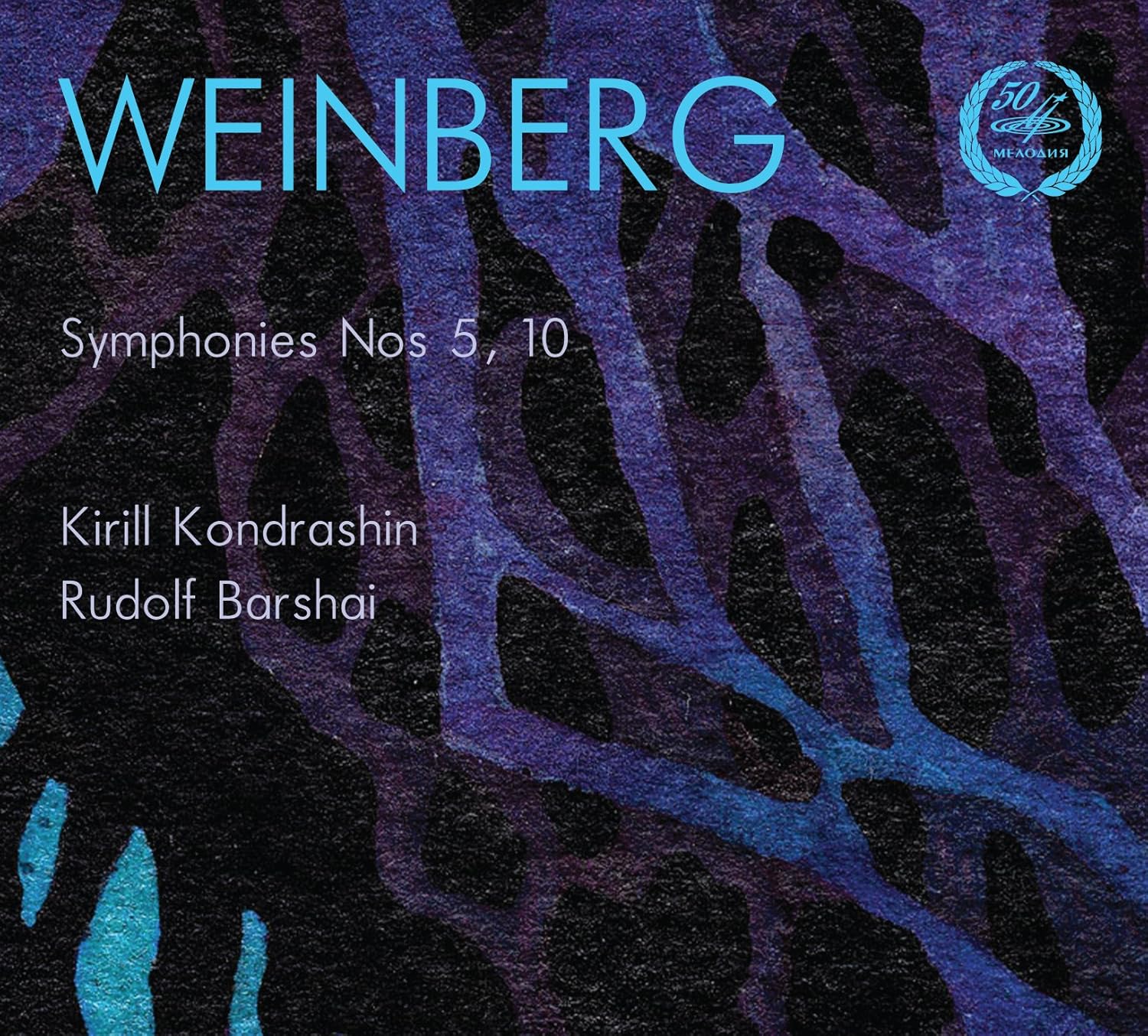
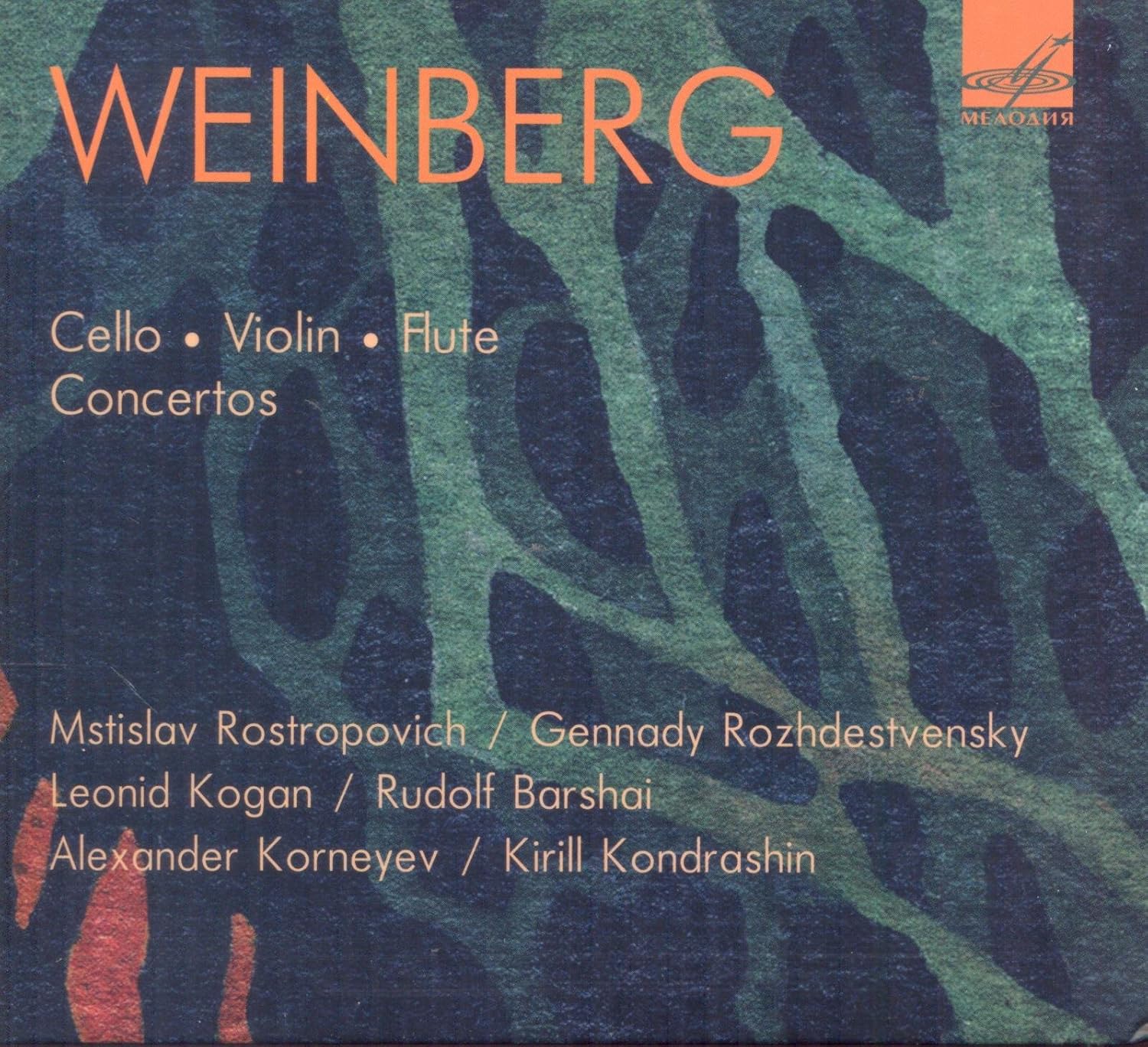
Probably the biggest story in recent Weinberg releases is the Russian label Melodiya opening their archives further, with two new CDs that are well worth investigating:

Melodiya - Weinberg Symphonies 5 & 10

Melodiya - Weinberg Concertos for Cello, Violin, and Flute

Of course, all of this music has previously been released long ago by Melodiya, but such releases have since become collector's items. With these new editions with an affordable price and attractive packaging, there is much to enjoy. The star factor of such artists as Kondrashin, Rostropovich, Kogan, Barshai, and more, is the icing on the cake. 

Friday, 19 June 2015

Upcoming release, featuring Weinberg's sonata for Double Bass

An exciting new release will be available in a few weeks. Karol Kowal and Katarzyna Brochochka feature on a new disc, featuring Brochochka's own compositions - and Weinberg's sonata for double-bass solo, op. 108.


Here's an email that I received from Kowal:

Dear Mr. Elphick,
I am writing to you to let you know about upcoming release of new CD with music by Mieczyslaw Weinberg. I am double bass player from Poland and my debut album featuring Weinberg's Double Bass Sonata op. 108 will be available soon. I hope you will find it interesting. As far as I know, there are only three recordings of this composition until now. I hope you will enjoy my interpretation of this piece, as well as other works included on the CD, which are world premiere recordings of bass music
by Katarzyna Brochocka.
The international distributor of this CD is Naxos, and the dates of the release are as follows:
Germany, June 26, 2015
http://naxosdirekt.de/items/werke-f%C3%BCr-kontrabass-316619
UK, June 29, 2015
http://www.mdt.co.uk/brochocka-weinberg-double-bass-works-kowal-katarzyna-brochocka-cd-accord.html
USA, Japan etc. July 10, 2015
http://www.amazon.com/Brochocka-Weinberg-Double-Bass-Works/dp/B00XUJM5FG
Booklet of this album contains the liner notes written by Peter Askim. Texts are in Polish and English.

Best regards,
Karol Kowal
Needless to say, I look forward to hearing this new recording of Weinberg's work.

Thursday, 28 May 2015

Biographies of Weinberg's parents

The following biographies are taken from the six-volume book 'Leksikon fun Yidishn Teater', edited by Zalmen Zylbercweig, published between 1931 and 1969. There is an online project to translate the whole work into English, which can be found at the following website. 

The biographies make for fascinating reading, though they should be read with the following warning. Zylbercweig's book is well-known for its inaccuracies, reflecting the difficult circumstances with which it was written. The Yivo Encyclopedia page on Zylbercweig has the following caveat about the book: 


Zylbercweig’s encyclopedia, a monument to his extraordinary dedication, reflects both his scholarly limitations and the difficult conditions of his work. The volumes have been insufficiently edited and contain errors and imprecise data. Even more problematic is the matter of sources. Although he provides bibliographies of varying degrees of accuracy at the end of each article, much of Zylbercweig’s information is based on his subjects’ personal communications, often about their own careers. The longer articles typically consist of lengthy citations from insufficiently identified sources that can be traced, if at all, only with great effort. However, the Leksikon is also a vast source of social and cultural documentation.
Michael C. Steinlauf, writting for the Yivo Encyclopedia of Jews in Eastern Europe - link. 

Bearing that in mind, I here reproduce both biographies in their English translation, with a few of my own notes afterwards.