Showing posts with label Quatuor Danel. Show all posts

Thursday, 8 August 2019

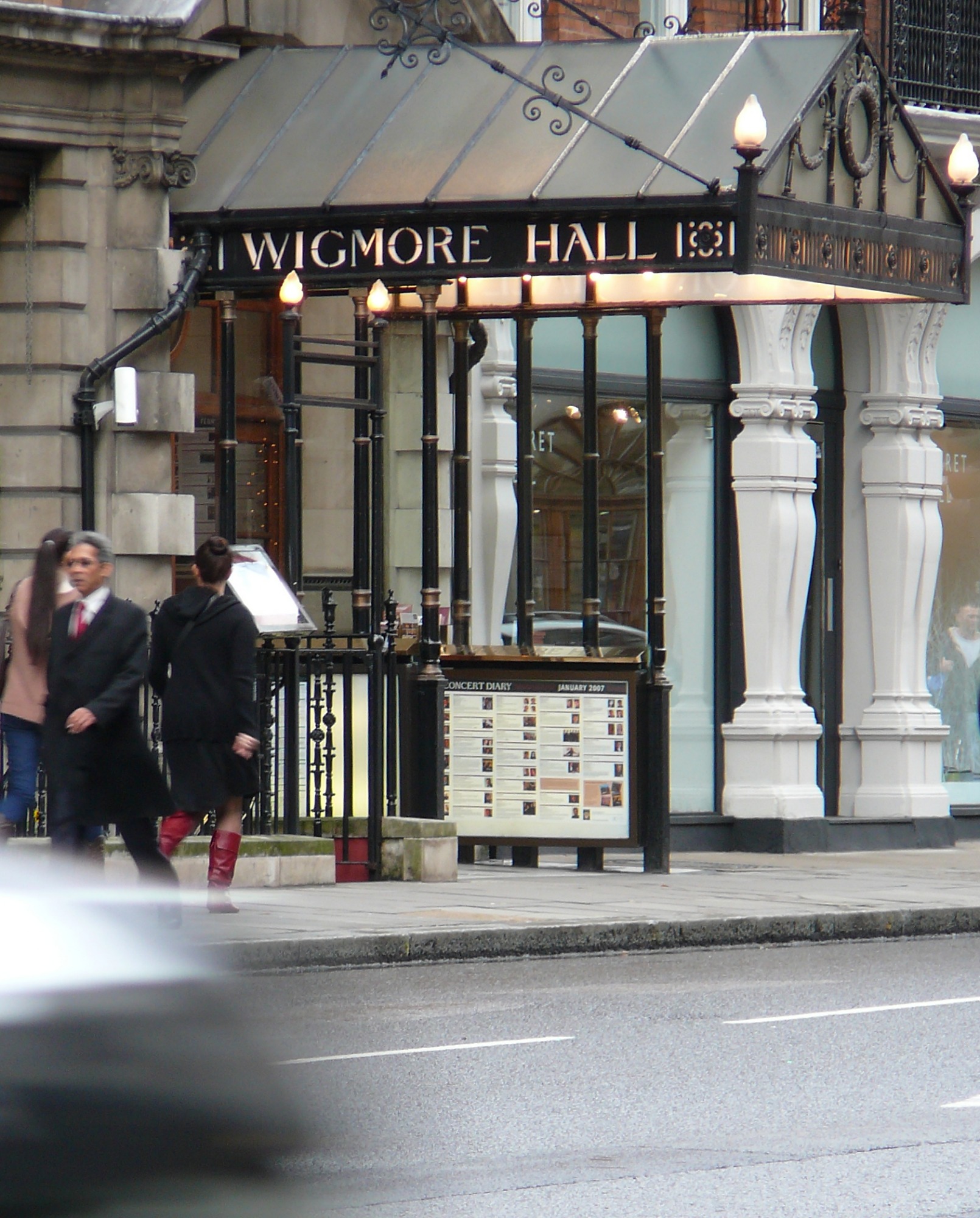
Weinberg at the Wigmore Hall


In the latest news relating to Weinberg's centenary year, I'm delighted to include details of the Weinberg season occurring at London's Wigmore Hall, beginning in October. The Wigmore Hall is one of the most famous venues for chamber music in the world, so it is wonderful that so much Weinberg will be performed there over the next few years. 

In what it is certainly the most ambitious overview of Weinberg's chamber music ever attempted, the Wigmore Hall have announced that the Quatuor Danel will be performing a double-cycle of Weinberg and Shostakovich over two season, finishing in 2021. The Danels are, of course, the pioneers of Weinberg's String Quartets through their CPO recordings, and also their performances and work as part of their residency at the University of Manchester. The first concert will be on Thursday 24 October, with more throughout the 2019/20 and 2020/21 seasons. 

Furthermore, Saturday 26 October brings an intensive day of events in the form of a Weinberg Focus Day. There will be three concerts of chamber music, featuring acclaimed violinist Linus Roth, including works for solo violin, violin and piano, piano trio, and song cycles. The day will also include a talk and launch event for my book Music behind the Iron Curtain. I will also be introducing each concert. 

Further details can be found on the Wigmore Hall's website here and here. These look set to be incredibly exciting concerts and certainly a measure of how the Weinberg revival has come. 


Monday, 28 January 2019

Photos from Manchester Weinberg Quartet Cycle and Conference

I'm still reeling from the incredible 'Mieczysław Weinberg: East meets West' conference at my Alma mater, the University of Manchester. The conference was organised by the ever-wonderful David Fanning and Michelle Assay, who pulled everything together with their indefatigable efforts. I promise a full write-up 'report' of the proceedings, but for now, here's a selection of photos from the four days (my own, and from other delegates and audience-members).

Full programme of the Quatuor Danel concerts.
Yours truly, leading a workshop-seminar with the Quatuor Danel on my reconstruction of Weinberg's First Quartet (photo credit: Richard Pleak)
An incredible 'surprise guest' at the conference: Gidon Kremer (photo credit: Richard Pleak)

Kremer performed and then gave a talk (before flying out straight afterwards!) (photo credit: Richard Pleak)

The academic conference included a Skype Q&A session with Victoria Bishops, Weinberg's first daughter.

Roberto Carrillo-Garcia gave a phenomenal performance of Weinberg's Sonata for Double-Bass in one of the afternoon concerts (photo credit: Richard Pleak)

The conference delegates were a friendly group, seen here in a large dinner in between sessions. 

The incredible Quatuor Danel (photo credit: Richard Pleak)

A wonderful group photo with the Danels, audience members and conference delegates, who all went together on the amazing journey through Weinberg's complete quartets (photo credit: The Symphonist, twitter handle: @deeplyclassical).  

Monday, 7 January 2019

University of Manchester Weinberg conference

Weinberg 100: 2

One of the first major centenary celebrations of 2019 takes place 24-27 January at the University of Manchester, UK. This is an academic conference, running alongside a series of concerts (including a complete Quartet cycle performed by the University's quartet-in-residence, the Quatuor Danel).

The programme includes a veritable who's-who of Weinberg experts, including his family and friends. I've pasted the full programme below; full details (including booking) can be found here.

Thursday 24 January 
1.10 Quatuor Danel concert (buffet lunch available before and after)

2.15 Opening of Weinberg Exhibition, in association with The Polish Cultural Institute, Manchester and the Adam Mickiewicz Institute, Warsaw

2.30 Quatuor Danel with Dr Daniel Elphick (Royal Holloway, London). Workshop on reconstructing the original version of Weinberg’s String Quartet No. 1.

3.15 Open session on ‘Weinberg and Performance’

4.00 coffee break

4.30 David Fanning and Michelle Assay: ‘Weinberg research: Present and Future’

5.30 dinner

7.30 Quatuor Danel concert

Friday 25 January
9.30 Verena Mogl (University of Hamburg) ‘Weinberg’s early years’, Antonina Klokova (Humboldt-University, Berlin) ‘title tbc’, Aleksander Laskowski (Adam Mickiewicz Institute, Warsaw) ‘ Weinberg and Tuwim’

11.00 coffee break

11.30 Inessa Dvuzhilnaya (Grodno, Belarus) ‘Weinberg in Minsk’, Christoph Flamm (Musikhochschule Lübeck) ‘Weinberg’s piano-chamber music’.

1.00 Quatuor Danel concert (buffet lunch available before and after)

2.30 Nicky Gluch ‘Shamor V’zachor: Observing and Remembering Mieczysław Weinberg’; Yelena Prokhorova (‘European Cultural Initiative’ named after M. Weinberg, Berlin) ‘The violin and its a musical-theatrical role in the artistic work of Weinberg’, Virginie Constant (Paris) ‘Weinberg’s works for cello’

4.00 coffee break

4.30 Concert: Songs by Weinberg and Shostakovich (Rosalind Dobson and Michelle Assay)

5.30 dinner

7.30 Quatuor Danel concert

Saturday 26 January
9.30 Bret Werb (Holocaust Museum, Washington DC) ‘Weinberg in Washington’, Levon Hakobian (State Arts Research Institute, Moscow) ‘Weinberg as a Bronze Age Figure’, Stefan Weiss (Musikhochschule, Hannover) ‘“And music made tongue-tied by prosody ...”: Mieczysław Weinberg’s Opus 33 in the history of Russian settings of Shakespeare’s sonnets’

11.00 coffee break

11.30 Daniel Elphick (Royal Holloway, London) ‘Weinberg and Polish-Russian relations’, Agnieska Nowok-Zych (Karol Szymanowski Academy of Music, Katowice, Poland) ‘Three life stories – one joint truth. Weinberg, Tuwim, Broniewski: inspirations and parallels’.

1.00 Quatuor Danel concert (buffet lunch before or after)

2.30 Dmitry Abaulin (Stanislavsky and Nemirovich-Danchenko Theatre, Moscow), ‘Weinberg at the Stanislavsky and Nemirovich-Danchenko Theatre’, Tommy Persson (Gothenburg) ‘Weinberg’s last years’

4.00 coffee break

4.30 Concert: Weinberg Sonata for Double bass solo (Robert Carrillo Garcia) and Piano Sonata No. 6 (Michelle Assay)

5.45–7.15 dinner

7.30 Quatuor Danel concert

Sunday 27 January
10.00 interview with Victoria Bishops: ‘Letters from my father’

11.00 coffee break

11.30 round-table discussion

12.15 buffet lunch

1.00 Quatuor Danel concert (including Piano Quintet with David Fanning)

3.30 end of event

Thursday, 1 October 2015

Weinberg Piano Quintet in Manchester

Tomorrow evening, the Quatuor Danel will be performing Weinberg's Piano Quintet, Op. 18, in Manchester. Joining them will be superstar pianist, Alexander Melnikov.


Weinberg's Quintet is one of his very best works. Hear the composer himself performing with the Borodin Quartet in this classic recording:


Details for the concert and tickets can be found here.

As a preview, here's my programme note for the concert:

Mieczysław Weinberg (1919-1996)
Piano Quintet, Op. 18 (1944)
I – Moderato con moto
II – Andante
III  – Presto
IV – Largo
V – Allegro agitato


Weinberg wrote his Piano Quintet between August and October 1944, at the age of 24. Barely a year after settling in Moscow, following his double escape from Nazi invasion (Warsaw to Minsk in September 1939 and Minsk to Tashkent in June 1941), he already had a blossoming reputation in the musical community of the Soviet capital. His Quintet is part of a larger group of chamber pieces written at prolific speed during the war years. Despite his youth, it is a formidable work, cast in five movements, similar to Shostakovich’s celebrated Piano Quintet of 1940. But whereas Shostakovich’s work is often contemplative in character, Weinberg’s Quintet is more extrovert as a whole. It is tempting to link the work’s serious tone to the war itself - Weinberg had left his family behind when he fled his native Poland – but unlike some of his later pieces, there are no concrete clues to this effect, such as quotations or self-quotations from songs. The piano part is particularly demanding, with several extended solos. A remarkable recording exists of the composer performing the piece with the Borodin Quartet – testament to his pianistic proficiency.
            The work’s opening phrase is immediately striking, with an austere tone that sets the mood for the first movement and the whole piece. The piano is pitted against the strings, with the quartet providing punctuating gestures to the piano’s weightier thematic statements. The dotted rhythm of the second theme allows the strings to dominate, but only briefly before the opening theme returns in a thunderous restatement.
            The second movement alternates a sinuous theme in the muted strings with a hectic solo from the piano. The latter’s triplet figurations rapidly expand to the whole ensemble, before reducing to a skeletal macabre texture, with the strings playing several eerie passages with the back of the bow – col legno.
            The third movement is a Presto that opens with muted flurries in the strings, soon joined by octaves high in the piano that create a feeling of tense expectation. This mood is shattered by a series of strenuous scales and trills, before a central dance section in which elements reminiscent of Klezmer and even a brief Chopin-esque passage for solo piano combine to emphasise the ‘cabaret’ feel already latent in the previous movement.
            The long-drawn Largo rapidly darkens the mood, providing a sobering contrast to the previous manic jubilation; its character is stark, verging on melancholic. A line of implacable octaves sets the tone. The first violin delivers a mournful solo, before a strident burst of major tonality in the piano. Energy accumulates, before a heart-rending flurry of passion. The quasi-recitative theme once again moves to the solo piano, before a morendo close. A contemporary reviewer described this movement as ‘disturbingly lyrical and deeply meditative’.
            With such contrasts already encountered, the final movement has several questions to address, which is does with a succession of strongly characterised themes. It opens with strident, almost machine-like pulsations, with aggressive interjections from the piano. Syncopated rhythms abound. The second theme is unexpected: firmly in the major, it presents a folk-like dance, playful and mischievous, like an east-European take on an Irish jig. The piano contrasts with a jazz-like canon, before the first violin reintroduces the opening movement’s first theme, taking up a thread that serves to unite the whole work. This is soon combined with the folk-like melody in an unsettling blend. The juxtaposition builds to become more jarring before a fiery restatement of the first movement theme in full. Energy dissipates for the work’s close, softly concluding in a troublingly inconclusive F major.

Daniel Elphick


Friday, 31 July 2015

July/August Update

Dear readers - apologies for any lack of input on this blog over recent weeks - my academic work has started to fill almost all of my time (see below!). However, here's a few links to relevant events, releases and general titbits from the world of Weinberg to keep you going.

Releases
Probably the biggest story in recent Weinberg releases is the Russian label Melodiya opening their archives further, with two new CDs that are well worth investigating:

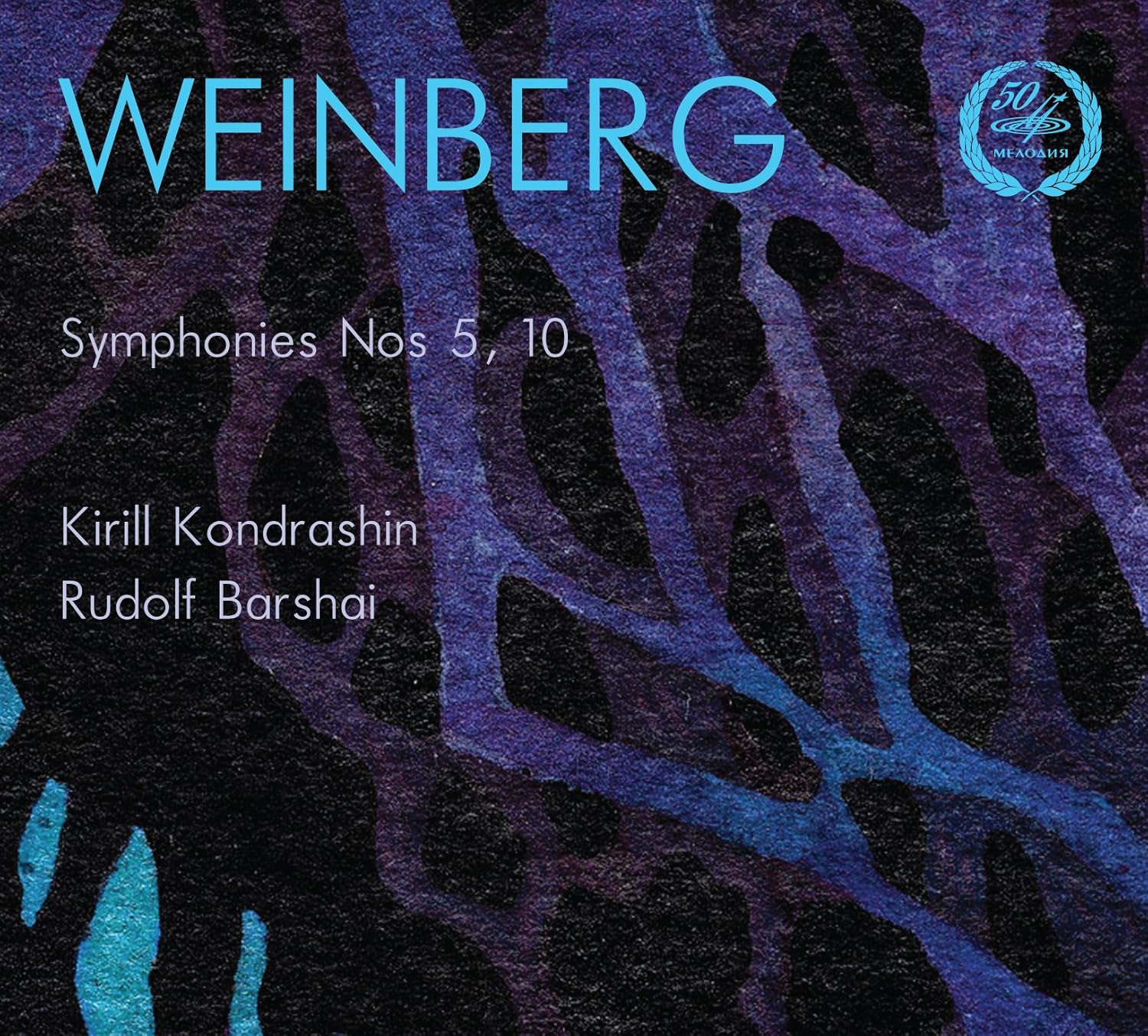
Melodiya - Weinberg Symphonies 5 & 10

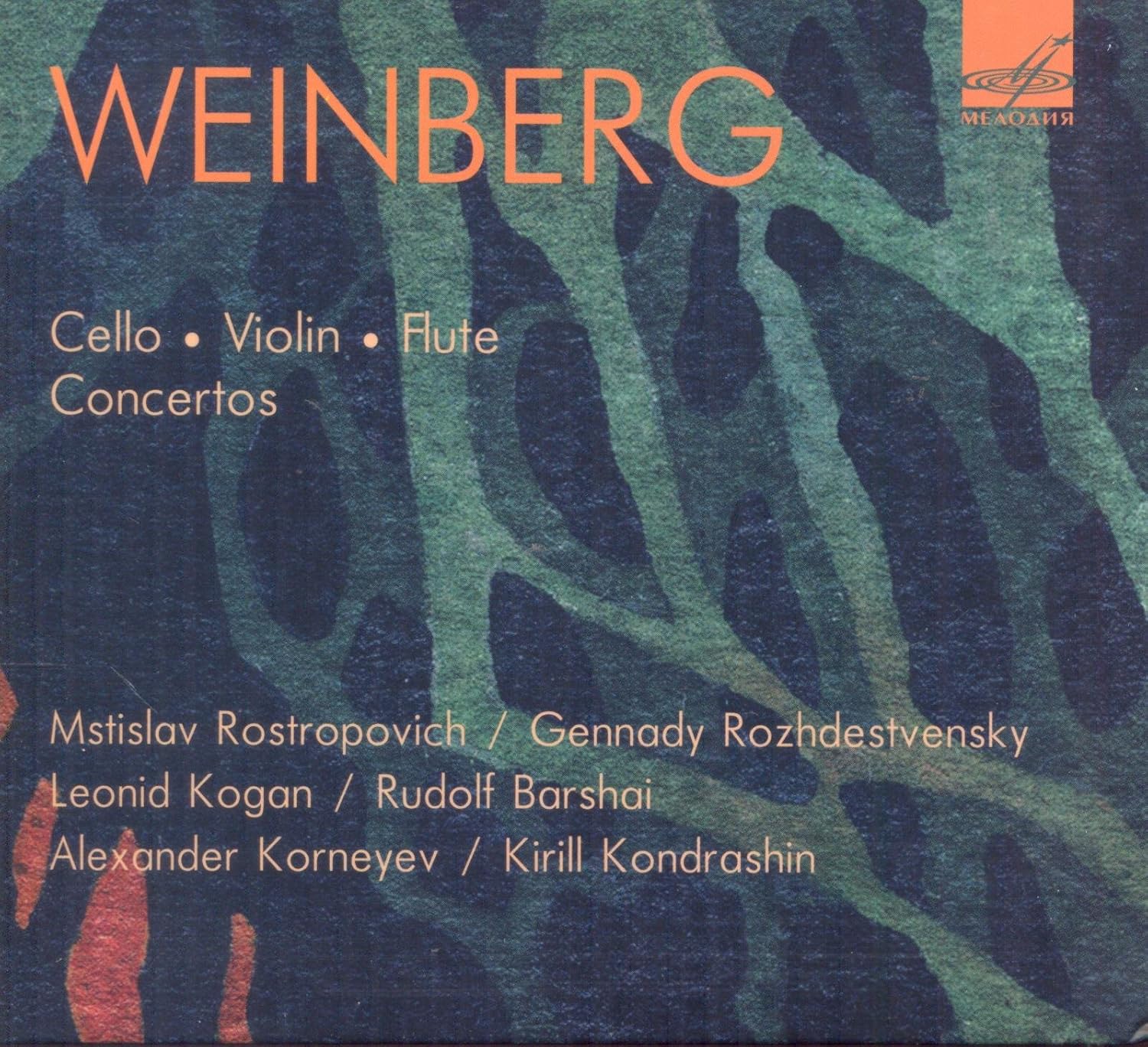
Melodiya - Weinberg Concertos for Cello, Violin, and Flute

Of course, all of this music has previously been released long ago by Melodiya, but such releases have since become collector's items. With these new editions with an affordable price and attractive packaging, there is much to enjoy. The star factor of such artists as Kondrashin, Rostropovich, Kogan, Barshai, and more, is the icing on the cake. 

Wednesday, 11 March 2015

Weinberg String Quartet No. 16, Op. 130 - Programme Note

Here's the programme note that I provided for the Quatuor Danel's concert at the Manchester Grammar School, 27/02/15:


Mieczysław Weinberg (1919-1996)
Quartet No. 16, Op. 130

I. Allegro
II. Allegro
III. Lento
IV. Moderato

The last time Weinberg saw his younger sister, Ester, she was limping into the distance, heading back to their parents’ house. In September 1939, the two siblings had fled from the Nazi invasion of Warsaw, heading east towards the USSR. Ester soon turned back because her shoes hurt her feet. Weinberg continued alone, and went on to reach the safety of the USSR. His parents and sister were later murdered in the holocaust.
            When Weinberg came to write his Sixteenth Quartet in 1981, he dedicated it to the memory of his sister, who would have turned sixty that year. It features a marked return to his Jewish heritage, as well as a new renewed interest in Bartók. The first movement opens with a striking passage for first violin and the lower voices give a chorale-like accompaniment that recurs throughout. The viola gives the second theme, with emphasised minor inflections. A process of thematic ‘darkening’ threatens to disintegrate the development section, an agitated feeling that lingers into the recapitulation. Even towards the movement’s close, ‘darkened’ versions of both themes provide a fractured sense of unease.
            A contorted scherzo and trio is presented in the second movement, with a character reminiscent of Bartók’s late quartets. The scherzo consists almost entirely of Weinberg’s signature musical motif, alternating fourths, with staggered entries evoking a clockwork mechanism. Towards the scherzo’s close, a contrasting lyrical theme with Lombard rhythms is given in the first violin. The trio section that follows is comparatively restrained and nostalgic. A ghost-like quality is sustained by an unusually wispy articulation - sul tasto, senza vibrato. The scherzo repeat interrupts this moment of tranquility, reintroducing the clock-like ticking from the movement’s opening.
            Weinberg’s mastery for solo string writing is deployed to full effect in the third movement. The first violin opens with a mournful singing line. The cello enters in a fugato-like texture, before the remaining two parts join also. A brief climax is reached before the procedure is repeated, with the first violin and cello starting once more. The viola and second violin enter in a similar manner, though with no climactic trajectory the second time round. A sombre sense of moral outrage is suggested during the movement, only to ebb away towards its close.
            The finale provides an uneven conclusion and brings Jewish thematic elements to the centre of attention. It opens with a sprightly waltz, together with an ‘Oom-pah-pah’ accompaniment. The waltz theme reaches a screaming climax, before the cello harks back to the second movement’s Lombard rhythm. The waltz and Lombard themes are juxtaposed together, before the music subsides to leave just the first violin – harking back to the beginning of the piece. A series of slow alternating chords brings the work to a gentle yet uneasy close.  
             
Daniel Elphick

The performance was a great success - the programme included Mendelssohn's Sixth Quartet (also dedicated to the memory of his sister) - and Schubert's Death and the Maiden - a rather nifty bit of programming!

Tuesday, 11 February 2014

February Update

Upcoming releases
The month of February brings several exciting Weinberg releases, some already available, some new and some with world premiere recordings.

First of all, the CPO label will be issuing a boxset of Weinberg's String Quartets, as recorded by the Quatuor Danel. Seeing as these recordings form a cornerstone that I consult on a daily basis, I can't recommend these enough. The six-volume cycle will be packaged in one box-set, at the extremely attractive price of EUR 29.99. From the CPO's site: (link).

Mieczyslaw Weinberg’s genuinely awe-inspiring complete seventeen string quartets are now available in a box set in interpretations by the Belgian Danel Quartet that can only be described as a musical blessing. Inspired by Shostakovich’s widow Irina (and other factors), the Quatuor Danel began acquiring the scores of all seventeen Weinberg quartets in 1995 and after a number of years (2007 to 2012) has now finished its complete recording for cpo. The BBC Music Magazine immediately named the first volume the best chamber music CD in March 2008, and further prizes followed. klassik-heute. com wrote, »In content and skill the works are equal to good works by Shostakovich, but this does not at all mean that Weinberg was a Shostakovich imitator. The Danels perform with unabating, often almost urgent intensity.« And Weinberg’s teacher and friend Shostakovich never missed an opportunity to recommend the works of his friend and fellow musician Weinberg. They were brothers in spirit. Both worked in manifold genres and over a broad stylistic spectrum ranging from folklore (in Weinberg’s case, Jewish folklore in particular) to twelve-tone elements. In the field of the string quartet Shostakovich involved his pupil in a friendly competition and was very happy in 1964 to be the first of the two to write his No. 10. Our final volume received the highest marks from klassik-heute. com: »A full 10 for exciting music and its enthralling interpretation by an exciting ensemble.«

--------------------
There is also news of another upcoming release from the CPO label - 'Chamber Music for Strings'.

    Led by the same musician who brought us the 'Chamber Music for woodwinds' release a few years ago, Elisaveta Blumina, the release promises to feature the following works:

Piano trio op. 24;
Sonatina for Violin & Piano op. 46;
Sonata for Double Bass solo op. 108

If the previous cd is anything to go by, this should worth buying. 

---------------------
I mentioned world-premiere recordings above, and the latest disc from Toccata Classics promises just that.

This upcoming disc is listed as 'in preparation' on the Toccata website (with very little information provided besides that and the album cover, seen above). Works to be featured:

Symphony No. 21, 'Kaddish', Op. 152 [wth Veronika Bartenyeva, Soprano] (World Premiere recording)
Polish Tunes, Op. 47, No. 2 (Also a world premiere)

The Siberian Symphony Orchestra, under Dmitry Vasilyev.
I must admit, I'm particularly excited about this release, I'm always pleased with premiere recordings. This leaves just Symphonies 9, 11, 13 and 15 still to be recorded.

--------------
Of course, is you can't until these discs are released, I still heartily recommend Gidon Kremer and the Kremerata Baltica's 2-disc set, which was something of a revelation when I reviewed it here.

-------------

Here's a few of the latest youtube videos of Weinberg:

Linus Roth and José Gollardo play the Weinberg Sonatina, Op. 46:

A preview of the Naxos Symphony 12 recording: (see my review here).

-------------

My own work is ticking along nicely. I recently survived my latest PhD assessment panel. My writing is now focusing on analysis of the Weinberg Quartets - I'm currently up to 12 out of 17! In publication news, I am pleased to announce that my manuscript for a set of conference proceedings has been submitted, with the full text available hopefully from June of this year, with paper copies available some time in Winter. Until then, some of my academic work is available for you to read on my profile on Academia.edu - link.

Thursday, 4 July 2013

Work Focus: String Quartet No. 6, Op. 35


     Weinberg’s String Quartet No. 6 in E minor, Op. 35, was written in 1946, 20 July–24 August. It represents a culmination of all that Weinberg had achieved in the genre thus far, and it remained a high water-mark for many years. This large six-movement work, lasting over half an hour in performance, condensed all of his previous work in large-scale forms and mastery of the quartet medium. The Sixth Quartet is dedicated to Georgy Sviridov, a pupil of Shostakovich’s who wrote in a neo-romantic vein, and with whom Weinberg was close friends at the time of writing. Sviridov’s diaries, published posthumously, revealed him to be a vicious anti-semite, but it appears this was not a barrier to his friendship with Weinberg. Some have suggested that Sviridov’s views could explain Shostakovich’s sudden break with him in the 1960s.

     The Sixth Quartet was almost immediately recognised as a significant work, and Myaskovsky intervened to secure its publication. Myaskovsky and Weinberg had been friends since 1940, and at one period shared an exchange of each other’s works similar to that between Weinberg and Shostakovich. The Composer's Union in the USSR was undoubtedly a peculiar organisation, one which allocated performance and publication rights to each composer. As a result, a work could be successfully published but never performed. This directly led to a ban on the Sixth Quartet in 1948, as it was named, along with several other works by Weinberg, in the infamous 'Prikaz No. 17' (Order No. 17), which featured works barreed from broadcast and performance. This order was revoked a year later, but its effects lasted for several years, and the Sixth Quartet never secured a performance during Weinberg’s lifetime, despite being republished in 1979. The world premiere would not occur for many years, with the first performance by the Quatuor Danel in Manchester, January 2007. Only following this has the Sixth Quartet come to be recognised as one of Weinberg's masterpieces, a work to rival the quartets of Shostakovich.

First movement, 'Allegro semplice'

First movement on youtube 

The quartet opens with a subdued movement in sonata form, with a distinctive lightness of form from the outset. Indeed, in his Fifth and Sixth Quartets, Weinberg preceded Shostakovich, achieving a lightness of texture that would go on to to characterise Shostakovich's later quartets, particularly his Fifth Quartet of 1952.

   The first theme is distinct, with its long minim notes and semiquaver flurries, elements that become focal points in the development. This apparently melancholic theme undergoes a process of 'roughening up', returning in a highly aggressive state after the development. The opening movement also introduces what will become a focal point for melodic and harmonic organisation in the quartet: the emphasis on expanded modes, rather than major or minor scales. (The somewhat unusual Locrian mode features prominently across the work).

Second movement, 'Presto agitato'
Link for second movement

    The second movement is the opposite of its predecessor in tone and energy. Marked ‘Presto Agitato’, it can be compared to the middle movement of the Fifth Quartet and the macabre tone of the Fourth Quartet, though the tendency here is more akin to the Fifth Quartet.

The 'roughening up' observed in the first movement erupts into full violence here, with a stormy mood throughout this movement. This can be heard in the rapid semiquaver movement throughout, combined with a regular pulse (in an almost Stravinskian fashion). Listen out for the rapid triplet figurations that descend through the parts at key cadential markers. The 'B' section material is distinct with its focus on quavers rhythms and a steadily increasing chromatic density. A 'C' section ruminates on both themes, before a lop-sided recapitulation of the 'B' section brings the movement to a close. As such, the work is in a somewhat unbalanced arch-form structure, with no recapitulation of the opening 'A' material'. However, this can perhaps be explained by the third movement.

Third movement, 'Allegro con fuoco'
Link 

   The second and third movement link attacca, and the opening of the third shares much of its character with its predecessor. They have identical metronome markings, and are only separated in performance by a quaver rest. This movement is extremely short, only extended by the lengthened solo passages in the first violin. As such, it can be viewed as a brief linking passage between the second and fourth movements.

   The opening material is derived straight from the second movement, while the quasi-candenza passages in the first violin come to be crucial marking points later in the quartet. It is tempting to suggest that in the Sixth Quartet, Weinberg approaches mastery of the genre, if we choose to read this movement as a commentary on what precedes and follows it. If we do, this would make it comparable to techniques scholars have observed in the late quartets of Beethoven, particularly Op. 131 (which is similarly outside the standard four-movement model for quartets, having seven movements). [N.B. - I do not wish to elevate Weinberg here to the status or quality of Beethoven's late quartets, I wish merely to point out several similarities that can be observed between the two composer's works. D.E.]

Fourth movement, 'Adagio'
Link 

   The fourth movement returns to a focus on textural lightness, and another break in character, as it opens in a slow fugato texture. The parts enter in a textbook-like manner, before ruminations on the theme. Again, the theme undergoes a process of 'darkening' or 'roughening' as heard in the first movement, before a restatement of the quasi-candenza passage from the third movement. This passage can now be understood to be transforming into a uniting cyclical aspect of the work.

Fifth movement, 'Moderato'
Link 

   This movement introduces a Schubert-like play between major and minor modes, first heard in the opening phrase, with an alternation between major and minor third in the accompanying parts. Relatively straight-forward tonal passages are linked by more chromatically complex bridging sections, in a manner already observed in much of Weinberg's writing up to 1946.

   The most distinctive motif in this movement can be heard in the middle section, where the cello takes the limelight, with a line full of dotted minims, bridged with links dominated by semiquavers. Above this, the accompanying parts give a frantic accompaniment, providing the harmony above the cello. Each of these gestures finishes with a violent sforzando pizzicato chord in the viola, providing a hint of violence in what is otherwise an ethereal and tender movement.

Sixth movement, 'Andante maestoso'
Link 

   The final movement can be read as a neat summary of the whole quartet, as well as incorporating several techniques that pervade Weinberg's quartets from the Third onwards. These include violent pizzicato chords as accompaniment, melodies harmonised in thirds across parts, chromatic ‘slips’ in melodic lines to give a suggestion of cheekiness, and flattened modality.

   The Locrian mode, as mentioned above, here provides a main focus, before several cyclical passages recall the previous movements of the quartet. Most strikingly, this includes the candenza passage that has proven so pervasive throughout the work since the Third movement. Weinberg combines this with an ascending major passage that becomes the main non-cyclical motif for the movement. The combination of recalled themes brings the movement, and the quartet to a gentle close.

--------------------------------------------------

Following the Sixth Quartet, Weinberg took a break from the genre, not writing another for some eleven years. Despite its lack of a performance, the work gained notoriety at the Composer's Union, primarily through published scores and piano four-hands private performances. As a result, it was banned from performances, and was later held up against Weinberg as too bold for its time. Only now is the Sixth Quartet coming to enjoy the reputation it deserves.

Recommended recordings:

Quatuor Danel, Mieczysław Weinberg, Complete String Quartets, Vol. 3, CPO label

Quatuor Danel on Amazon.co.uk
An excellent rendition by the ensemble that premiered the work, Manchester's own quartet-in-residence.


Pacifica Quartet, The Soviet Experience, Vol. 3, Cedille label

Pacifica Quartet on Amazon.co.uk
The Pacifica Quartet's 'Soviet Experience' project sees them combining Shostakovich quartets with contemporary Soviet works, and their third release features Weinberg's Sixth Quartet in an exhilarating performance. Can't recommend enough.