Tuesday, 11 February 2014

February Update

Upcoming releases
The month of February brings several exciting Weinberg releases, some already available, some new and some with world premiere recordings.
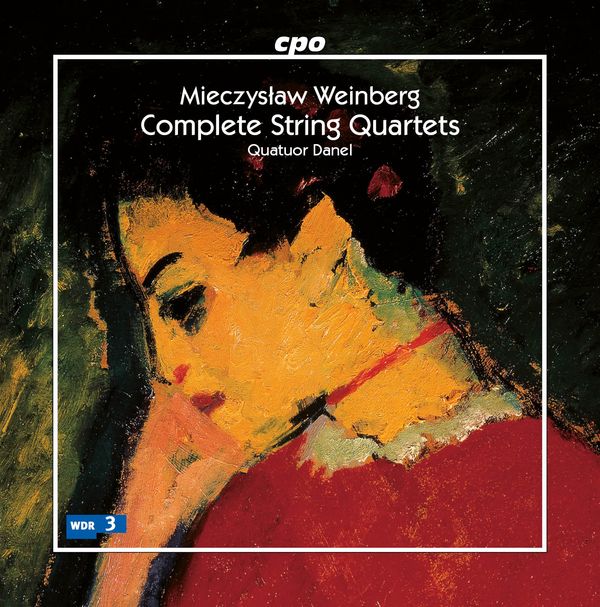
First of all, the CPO label will be issuing a boxset of Weinberg's String Quartets, as recorded by the Quatuor Danel. Seeing as these recordings form a cornerstone that I consult on a daily basis, I can't recommend these enough. The six-volume cycle will be packaged in one box-set, at the extremely attractive price of EUR 29.99. From the CPO's site: (link).

Mieczyslaw Weinberg’s genuinely awe-inspiring complete seventeen string quartets are now available in a box set in interpretations by the Belgian Danel Quartet that can only be described as a musical blessing. Inspired by Shostakovich’s widow Irina (and other factors), the Quatuor Danel began acquiring the scores of all seventeen Weinberg quartets in 1995 and after a number of years (2007 to 2012) has now finished its complete recording for cpo. The BBC Music Magazine immediately named the first volume the best chamber music CD in March 2008, and further prizes followed. klassik-heute. com wrote, »In content and skill the works are equal to good works by Shostakovich, but this does not at all mean that Weinberg was a Shostakovich imitator. The Danels perform with unabating, often almost urgent intensity.« And Weinberg’s teacher and friend Shostakovich never missed an opportunity to recommend the works of his friend and fellow musician Weinberg. They were brothers in spirit. Both worked in manifold genres and over a broad stylistic spectrum ranging from folklore (in Weinberg’s case, Jewish folklore in particular) to twelve-tone elements. In the field of the string quartet Shostakovich involved his pupil in a friendly competition and was very happy in 1964 to be the first of the two to write his No. 10. Our final volume received the highest marks from klassik-heute. com: »A full 10 for exciting music and its enthralling interpretation by an exciting ensemble.«

--------------------
There is also news of another upcoming release from the CPO label - 'Chamber Music for Strings'.

    Led by the same musician who brought us the 'Chamber Music for woodwinds' release a few years ago, Elisaveta Blumina, the release promises to feature the following works:

Piano trio op. 24;
Sonatina for Violin & Piano op. 46;
Sonata for Double Bass solo op. 108

If the previous cd is anything to go by, this should worth buying. 

---------------------
I mentioned world-premiere recordings above, and the latest disc from Toccata Classics promises just that.

This upcoming disc is listed as 'in preparation' on the Toccata website (with very little information provided besides that and the album cover, seen above). Works to be featured:

Symphony No. 21, 'Kaddish', Op. 152 [wth Veronika Bartenyeva, Soprano] (World Premiere recording)
Polish Tunes, Op. 47, No. 2 (Also a world premiere)

The Siberian Symphony Orchestra, under Dmitry Vasilyev.
I must admit, I'm particularly excited about this release, I'm always pleased with premiere recordings. This leaves just Symphonies 9, 11, 13 and 15 still to be recorded.

--------------
Of course, is you can't until these discs are released, I still heartily recommend Gidon Kremer and the Kremerata Baltica's 2-disc set, which was something of a revelation when I reviewed it here.

-------------

Here's a few of the latest youtube videos of Weinberg:

Linus Roth and José Gollardo play the Weinberg Sonatina, Op. 46:

A preview of the Naxos Symphony 12 recording: (see my review here).

-------------

My own work is ticking along nicely. I recently survived my latest PhD assessment panel. My writing is now focusing on analysis of the Weinberg Quartets - I'm currently up to 12 out of 17! In publication news, I am pleased to announce that my manuscript for a set of conference proceedings has been submitted, with the full text available hopefully from June of this year, with paper copies available some time in Winter. Until then, some of my academic work is available for you to read on my profile on Academia.edu - link.

Tuesday, 4 February 2014

Review: 'Mieczysław Weinberg', Gidon Kremer & Kremerata Baltica

This album sets a new high-water mark for the ongoing Weinberg revival.


Gidon Kremer is one of the most famous violinists of our time; the announcement of an all-Weinberg release from him and his Chamber Orchestra of Baltic musicians made for high expectations. Over the course of his career, Kremer has been a pioneer for programming Soviet and/or Russian music, including the likes of Schnittke, Pärt, and Sylvestrov. In a series of concerts towards the end of last year, Kremer toured with Martha Argerich, performing works by Weinberg and Beethoven.

This 2-CD set presents something of a retrospective, moving from chamber music works on the first disc to two orchestral pieces on the second disc. Particularly notable is the range of works chosen: music from Weinberg's tuneful and heartfelt earlier period, and also more intricate, 'difficult' works from later in his career. The running order goes as follows:

CD 1
Sonata No. 3 for Solo Violin, Op. 126 (1979)

Trio for Violin, Viola and Cello, Op. 48 (1950)

Sonatina for Violin and Piano, Op. 46 (1949)

CD 2

Concertino for Violin and String Orchestra, Op. 42 (1948)

Symphony No. 10, Op. 98 (1968)

From quick inspection, three of these works are from one close-knit period, 1948-50, yet they are adequately distinct from one another to still present something of a Weinberg 'portrait'. More impressive is the brave decision to open with Weinberg's Third Sonata for solo violin, a thoroughly challenging work for both performer and listener. Striking from the very opening is Kremer's complete command of the music - with his detailed knowledge of Russian/Soviet repertoire, Kremer appears to effortlessly slip into Weinberg's demanding style and idiosyncrasies. One could be forgiven for feeling emotionally drained after Kremer's roller-coaster performance to open the record. To follow with the warm and melodic Trio for violin, viola and cello is a stroke of programming genius. 
   
   Kremer is joined by Daniil Grishin (viola) and Giedrė Dirvanauskaitė (cello) for the Trio. Over the course of the work, it is plain to tell that the insightful interpretation of Weinberg's style is not limited to the Kremerata Baltica's concertmaster alone - Grishin and Dirvanauskaitė prove themselves more than capable. Excellent ensemble is complimented by a warm and responsive recording, perfectly balanced against the cold and frantic character of the solo sonata that preceded. (If the Baltica ever needed ideas about further Weinberg works to record, I would suggest that they turn their attentions to any of the 17 string quartets, judging by the standard of this trio performance).

   For the Sonatina for violin and piano, Kremer is joined by Daniil Trifonov on piano, himself an up-and-coming superstar. At the age of 22, Trifonov is already making waves, praised by Martha Argerich, with recordings on the Deutsche Grammaphon label. In combination, Trifonov and Kremer transform this Sonatina into a multi-layered performance that showcases both of their talents excellently. In particular, the 'Lento' middle movement is poignant and beautiful in their hands. 

   For the second disc, the rest of the Kremerata Baltica join, beginning with the Concertino for violin and string orchestra. This work has received particular attention in recent recordings, this disc making it three different versions released over the last six months. Needless to say, Kremer's turn as orchestral soloist is his shining moment for the whole album. A perfect balance between restraint and heart-felt passion marks Kremer's version as outstanding (I'm especially a fan of the choice of tempi compared to other recordings - with a very close adherance to Weinberg's demanding indications in the score). Needless to say, Kremer's cadenza is breathtaking. 

  For the final work on the album, an altogether more demanding piece. Weinberg's Tenth Symphony, written 1968, reflects his forays into twelve-note writing and experimentation with large-scale forms. The five-movement piece requires multiple listens to penetrate its confrontational sound-world - though once achieved, it is hugely rewarding. The mood tends towards slow and pensive - particularly in the opening movement. Special mention needs to made of Giedrė Dirvanauskaitė's solo cello playing, with complemented by Daniil Grishin on viola and Danielis Rubinas on Double Bass, with smaller ensemble playing that balances extended solo passages. This recording is easily the best of Weinberg's Tenth. It would appear that a large amount of intensive rehearsal time went into the preparation for this release. 

 Programme notes are supplied by Wolfgang Sandner (translated by Bradford J. Robinson), and take a rather poetic tone in setting the scene for Weinberg's biography and his wider Soviet context. Perhaps the only 'dubious' item in the set is the inclusion of Kremer's reading of the solo violin sonata. Dedicated to the composer's father, Kremer divides the work into seven sections, each with a programmatic title. Perhaps Kremer can be forgiven for such a borderline-questionable reading, particularly since his performance speaks worlds more than such arbitrary labels ever could.

------------------------

I opened this review with the grand assertion that this album sets a new high-water mark for the Weinberg revival. To clarify, I don't expect an overnight upsurge in his music. Rather, such a nuanced and controlled recording by musicians at the top of their game acts as a perfect showcase for Weinberg, one that aspiring future artists will have to refer back to. What's more, the excellent choice of programming serves as a brave introduction, making no bones about the sometimes difficult but always emotional character of the music. If anyone asks for a suitable recording to 'introduce' Weinberg, this has to be the go-to one for me from now on.
   With the American premiere of The Passenger, and Kremer's American tour playing Weinberg's music, I hope that this recording will go down a storm. Kremer and the Baltica are touring the states until Feb 8th, many concerts featuring one of the orchestral works from this release. If you have the opportunity, I urge you to go. I, meanwhile, will be patiently hoping that they will visit the UK.

Do visit the Kremerata Baltica website for details of their touring schedule - here

And I heartily recommend that you pre-order the album itself - (amazon.co.uk link)

Wednesday, 22 January 2014

January 2014


Hello readers, I hope all is well. This is my update for January 2014. As I'm sure you are aware, The Passenger premiered in Houston, Texas on Saturday 18th January, and I eagerly await a plethora of reviews. Below is a selection of those already published:

David Clarke, Broadway World - link 'the only appropriate superlative to describe HGO's US premiere of The Passenger is brilliant'. 

Scott Cantrell - Dallas Morning News - link 'Sadly, the opera could use a lot of editing and tightening... three hours, with one intermission, seemed interminable'.

D.L. Groover - Houston Press - link 'Weinberg's forgotten opera is everything contemporary opera should be... a shattering experience'.

I shall update the above list, hoping to keep a balance between critical and praise-ridden reviews. 
If my predictions are correct, The Passenger will go down a storm with US audiences and critics, but only time will tell. Future US runs are planned for New York in July, and Chicago in 2015.

 Melody Moore and Michelle Breedt in 'The Passenger', Houston Grand Opera 2014.

-----------------

I hope you'll find the youtube videos below interesting.

1. Linus Roth discusses his upcoming release, featuring the Britten and Weinberg violin concertos.

2. Gidon Kremer and Martha Argerich perform Weinberg Sonata for Violin and Piano No. 5, Op. 53 (live recording).

----------------

I'd like to plug an updated version of the University of Manchester's webpage about Weinberg research at the University (link). The page sums up the wider impact of Professor Fanning's research, and details several exciting projects for the future.

-----------------

My own work is plodding along well, with another big panel meeting assessment for next week. I am submitting a literature review chapter for the meeting, in which I detail approaches to analysis that I wish to apply to Weinberg's quartets. I'll keep you posted with updates.

I also mentioned in December that I was lucky enough to be accepted to speak at the University of Leeds conference 'Music, Memory and Migration in the Post-Holocaust Jewish Experience', taking place July 2014. Please find the abstract for my paper below:

Commemorating the Past: Weinberg’s Experience as a Jewish Migrant in the USSR


Weinberg’s background is unique among Soviet composers; he fled eastwards from Poland in 1939 and was accepted into the USSR. He established a successful career for himself, working with the most prominent Jewish musicians of his day and praised as ‘the leading Soviet-Jewish composer’. Having narrowly escaped Nazi Germany, Weinberg fell victim to Stalinist antisemitism and was imprisoned for several months in 1953. Upon his release, he made it his life’s mission to commemorate those who had fallen victim to atrocities.
    Jewish themes in Weinberg’s music serve a dual purpose; to commemorate victims of the Holocaust, including his parents and sister, and to reassert his Jewish heritage, despite his displacement to a less-than hospitable climate. An internal struggle can be traced across his music, to reconcile between the need to celebrate his heritage as well as to celebrate the USSR as his ‘saviours’ from the Nazis. In this paper, I explore the experience of Jewish composers in the Soviet Union through Weinberg’s case study. I also outline Weinberg’s commemorative works including, most controversial of all, his opera The Passenger. The opera is provocative, not least because the on-stage action is set in Auschwitz itself. This provides fresh challenges for modern-day audiences and critics alike. The Passenger also calls into question the appropriateness of commemoration through depiction, alongside Weinberg’s struggle to represent his displacement through music.


 While it is certainly difficult to watch, the only appropriate superlative to describe HGO's US Premiere of THE PASSENGER is brilliant
While it is certainly difficult to watch, the only appropriate superlative to describe HGO's US Premiere of THE PASSENGER is brilliant.
While it is certainly difficult to watch, the only appropriate superlative to describe HGO's US Premiere of THE PASSENGER is brilliant

Monday, 13 January 2014

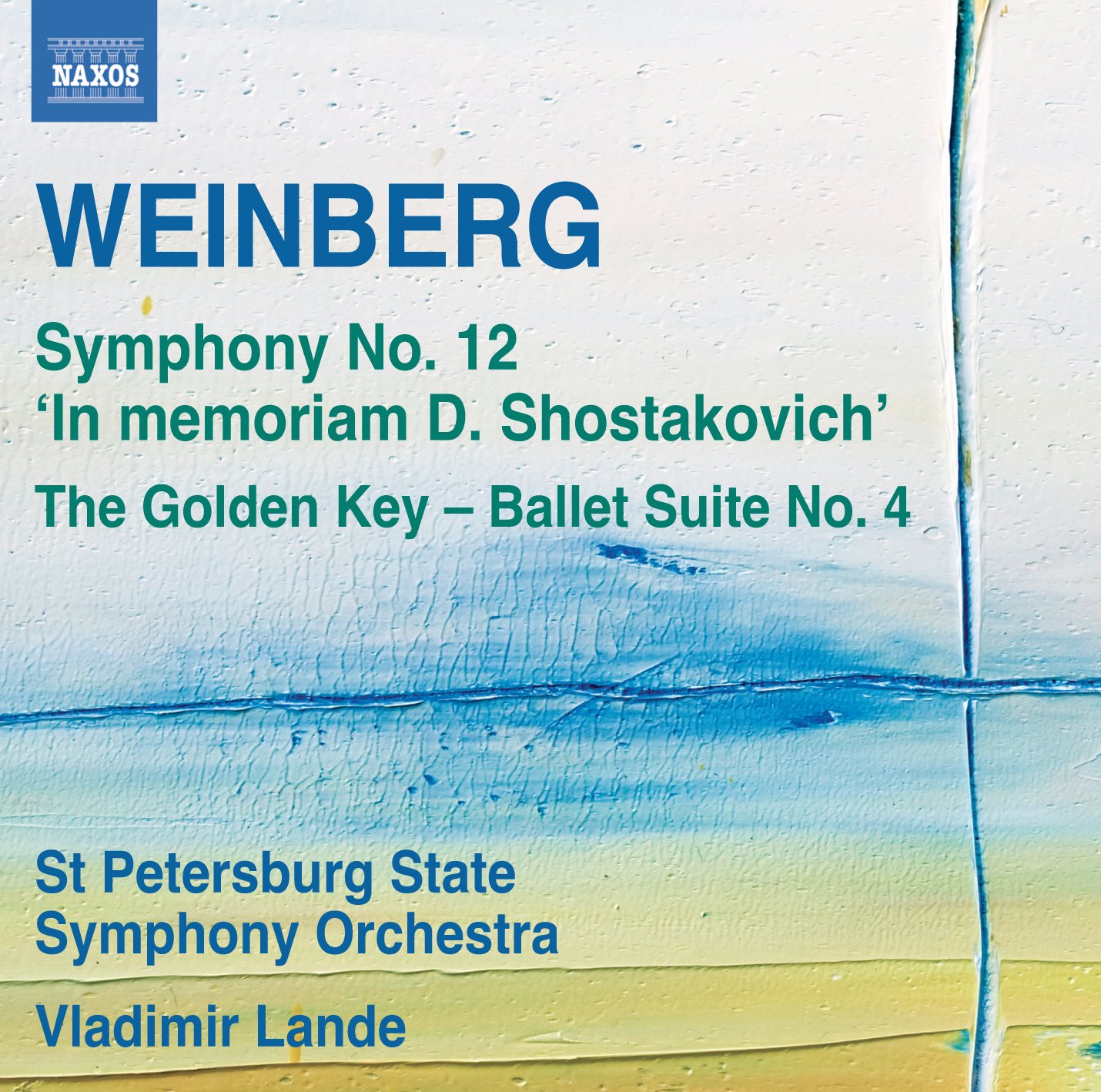
Review: Symphony No. 12, Golden Key, Suite No. 4 - Vladimir Lande and the St. Petersburg State Symphony Orchestra


The latest installment in Naxos' ongoing survey of Weinberg's symphonies: the verdict - great music with a good standard of performance (though not excellent). 

Every part of me wishes to praise this recording, if only for the music featured. Weinberg's 12th Symphony stands among his best, largely due to the heart-felt dedication following Shostakovich's death, and the Golden Key remains an entertaining ballet, demonstrating Weinberg at his most playful. 

The pairing of Lande with the St. Petersburg State Symphony Orchestra gave us the excellent recordings of the Sixth and Nineteenth Symphonies, both from 2012. While featuring excellent music, this disc fails to demonstrate the same unity and energy to be heard in their previous two recordings. 

Weinberg's Twelfth Symphony, Op. 114, was written in 1976, dedicated to Shostakovich. It joins the ranks of a glut of works similarly dedicated following Shostakovich's death in 1975, including Tishchenko's Fifth Symphony and Schnittke's Prelude in Memoriam Shostakovich. Weinberg's Twelfth is somewhat unusual in its lack of direct quotation from Shostakovich's music - for instance, there is a large number of dedicated works built around the 'DSCH' motif. Weinberg's Twelfth avoids such direct reference, instead choosing to emulate him stylistically, simultaneously raising questions about where to go following the loss of such an inspirational figure. 

The work opens with a declamatory unison sequence across the orchestra, searching for a stable centre. Unfortunately, the strings seem to fall victim to the higher passages in the opening movement, resorting to a near-shrieking style that soon becomes uncomfortable. Tempos are taken at a relatively safe pace, compared to previous recordings (see recommended further listening, below). 

The release does come into its own following the opening, the more playful Allegretto second movement showcasing the vitality that this ensemble has injected into their previous recordings (perhaps a shame it couldn't have seeped its way into the first movement!). The string section reclaim their dignity in the Adagio third movement, where they take a tender focus, giving a heart-breaking softness. The finale stands out as an excellent movement, notable from its opening xylophone, linked attacca from the previous movement. With such a distinct motif, the music gathers pace, and Lande does full justice to this rousing finale. 

The pairing of the symphony with the Fourth Suite from Weinberg's ballet The Golden Key is an example of excellent programming - the contrast between the works is striking, allowing the St. Petersburg State Symphony Orchestra full reign to showcase their range, particularly effective in the dance-like, cheeky passages in the suite. Richard Whitehouse's liner notes provide excellent background information for both works. 

I strongly recommend this recording, partly for its ambition and its place within the Naxos symphony cycle, as well as its excellent interpretation of the Golden Key suite. For an authoritative recording of the Twelfth Symphony I would look elsewhere, however.

Links for further reading: Naxos website link 
And a podcast about the recording from Naxos: link

Recommended further listening
For an contrasting recording, I recommend Vladimir Fedoseyev with the USSR TV and Radio Symphony Orchestra in their release, originally available on vinyl, conveniently uploaded on youtube:

For my 'authoritative' recording, I direct the reader to the second volume of Olympia's 'Vainberg' series, featuring the Twelfth Symphony performed by the forces that premiered the work, recorded a month after the premiere. The dedication is made all the more emotional by the presence of Shostakovich's son Maxim conducting (recording quality is poor compared to the Lande version - but the conviction in performance more than makes up for this).

Also available to listen on youtube (in six parts): 

Of course, I also direct the reader to Lande's previous Weinberg recordings on the Naxos label - both of them excellent.


Friday, 3 January 2014

RMA Research Students' Conference 2014

For anyone attending, I will be speaking at the RMA Research Students' Conference next week, held at the University of Birmingham. My paper is entitled 'The Influence of Anxiety', and I will be speaking at 14:45 on Wednesday 8th January in the 'Psychology of Music' session.

My paper is on the significance of Harold Bloom's book The Anxiety of Influence, and its applications in musicology, followed by wider thoughts on the aesthetics of influence in music (with a few references to my work on Weinberg). Please find my paper abstract below:

Daniel Elphick, The Influence of Anxiety
Harold Bloom’s theories of influence in poetry are well known and many scholars have sought to apply them to wider fields of art. His aggressive vision of artistic influence has new authors ‘appropriate’ their predecessors’ works leading to an Oedipal elimination of the father-figure of influence. Bloom’s theories have proved highly significant in musicology, but also problematic. This paper seeks to give a brief overview of Bloom’s writings and move to a review of Musicologists’ attempts to utilise his theories as set out in the book The Anxiety of Influence. It becomes apparent that these cannot be easily adapted to music since they perpetuate the contested concept of ‘originality as progress’. I seek to demonstrate this with short case studies of friendships between composers that cannot be easily moulded to fit alongside Bloom’s aggressive writings. With these, I suggest a new template of musical influence, utilising thoughts from T.S. Eliot, Benjamin Britten and several others authors simultaneously calling for a reassessment of this complex issue from the perspective of musicology.